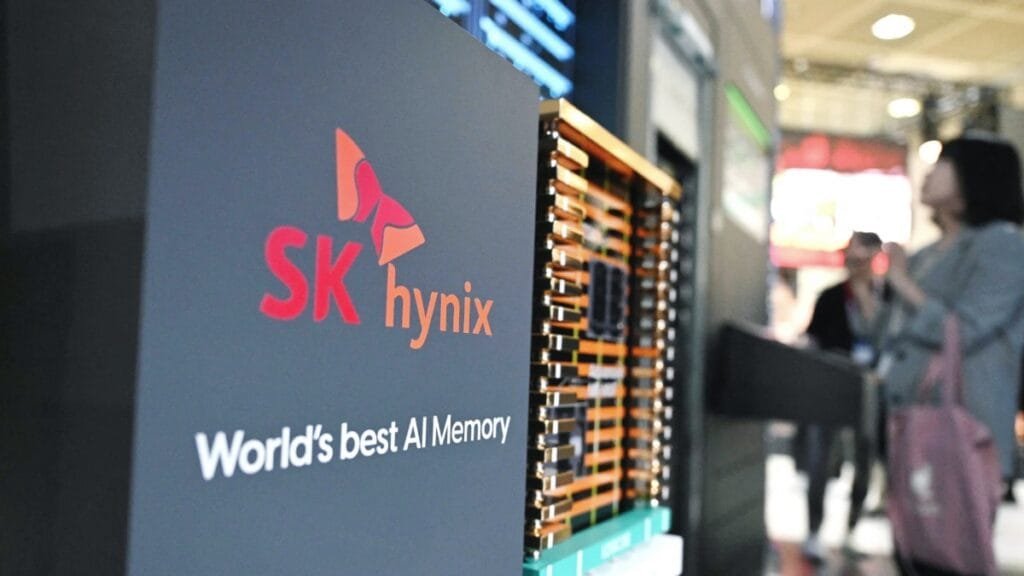
The global semiconductor industry is undergoing a monumental transformation, and at the heart of this change is a name that has become synonymous with the AI revolution: SK Hynix. This South Korean memory chip giant has not just participated in the tech boom; it has positioned itself as a cornerstone of the artificial intelligence infrastructure that is reshaping the modern world. Once a company teetering on the brink of collapse, SK Hynix has engineered one of the most remarkable corporate turnarounds in history, culminating in a market valuation that has surpassed its illustrious domestic rival, Samsung Electronics, to become South Korea’s most valuable company. This meteoric rise is not merely a fleeting market trend but is underpinned by a fundamental shift in the economics of memory chips, driven by the insatiable demand for high-performance computing.
Investors have taken note, propelling SK Hynix stock on an incredible rally, with shares surging over 340% in the year so far and an astonishing 800% over the past year. This extraordinary growth reflects the company’s dominant position in the high-bandwidth memory (HBM) market, a specialized segment of the memory industry that is absolutely critical for powering the complex AI models developed by tech titans like Nvidia and Alphabet’s Google. As AI evolves from simple chatbots to agentic and physical AI systems, the demand for the advanced memory chips that SK Hynix specializes in is only expected to intensify.
The timing is significant, as the company embarks on a historic U.S. stock market listing with one of the largest share sales ever. This move is set to broaden its global investor base and provide the capital needed to fuel its aggressive expansion plans. However, with recent market volatility and questions surrounding the longevity of the AI-driven boom, many are asking: Is SK Hynix stock a solid long-term investment, or is it overvalued? This article explores the drivers of SK Hynix’s success, its strategic advantages, and the challenges it faces as it navigates the next phase of the AI memory supercycle. We will analyze its market leadership, its groundbreaking technology, and the potential risks to help you understand why this trillion-dollar giant has become one of the most talked-about stocks in the world.
The AI Catalyst
The AI Catalyst: How SK Hynix Became a Memory Market Leader
SK Hynix’s journey to dominance is a story of strategic vision and technological foresight. Unlike the traditional memory chip market, which was characterized by cyclical booms and busts driven by PC and mobile phone demand, the landscape has fundamentally changed. The emergence of AI has transformed memory chips from commoditized components into critical infrastructure. At the center of this shift is high-bandwidth memory (HBM), a specialized type of DRAM that is vertically stacked to deliver exceptional speed and energy efficiency, essential for the massive data processing requirements of AI accelerators.
This strategic focus has allowed SK Hynix to establish a commanding lead in the HBM market. As of the first quarter of 2026, the company held a dominant 58% market share, far outpacing its nearest rivals, This dominance is not a recent development; the company’s decision to continue investing in HBM during an industry downturn has paid off handsomely, creating a high barrier to entry for competitors. The company’s market share in key segments as of Q1 2026 underscores its leadership: it holds the top position in HBM at 58%, and is number two in both overall DRAM at 29% and NAND flash at 18%.
The impact of this leadership is clearly visible in the company’s financial performance. After posting an annual operating loss in 2023 due to a severe market downturn, the company rebounded with unprecedented strength. In the first quarter of 2026, SK Hynix delivered blockbuster results, reporting a staggering 198% year-over-year revenue surge alongside record operating profits, driven by an extraordinary 72% operating margin that highlights the pricing power the company currently wields in an undersupplied HBM market, This financial firepower has not only allowed the company to surge past Samsung in market cap but also to aggressively fund its future growth.
A Historic $29.4 Billion Event
The U.S. Listing: A Historic $29.4 Billion Event
In a landmark move, SK Hynix is launching one of the largest share sales in history by listing its American Depositary Receipts (ADRs) on the Nasdaq stock exchange. Trading is scheduled to begin on July 10, 2026, under the ticker symbol “SKHY”, The offering is expected to raise approximately $29.4 billion through the issuance of 17.79 million new shares, making it potentially the largest-ever U.S. listing by a foreign company and one of the biggest global share sales since a record offering by SpaceX.
This listing is much more than a liquidity event; it is a strategic masterstroke. By listing in the U.S., SK Hynix is removing what analysts call an “accessibility discount” For years, U.S. institutions and retail investors have had limited direct access to Korean equities, making it difficult to invest in one of the world’s most important semiconductor companies. The ADR listing is expected to make SK Hynix shares more accessible, leading to a potential re-rating of the stock’s valuation and potentially narrowing its valuation gap with U.S. rival Micron Technology. Institutional analysts note that if SK Hynix’s valuation aligns with Micron’s multiple, the underlying Seoul-listed shares could see a 30% upside, with ADR prices potentially trading at a 20% premium due to enhanced global accessibility.
The capital raised from the ADR sale is earmarked for the company’s ambitious expansion plans. Proceeds will be used primarily to build new semiconductor fabrication plants in South Korea and purchase advanced chipmaking equipment, including the latest extreme ultraviolet (EUV) scanners from the Dutch company ASML, The company has also announced plans to spend up to $720 billion to expand facilities in South Korea and invest around $7.8 billion on new ASML EUV machines by the end of 2027, This aggressive capacity expansion is part of a broader strategy to double its DRAM wafer capacity to approximately 1 million wafers per month by 2030, The offering has already drawn massive demand, with major investors, including Baillie Gifford Overseas and funds managed by Coatue Management, indicating interest in buying up to a combined $7 billion worth of ADRs.
Financial Health and Analyst Sentiment
The overwhelming positive sentiment from analysts reflects SK Hynix’s robust financial health and its central position in the AI ecosystem. Investment banks have been raising their price targets and earnings forecasts, citing strong long-term demand and the company’s strategic advantages. The company’s forward P/E ratio sits at approximately 5.9x to 7.8x, a steep discount relative to Micron’s roughly 9x to 11x and TSMC’s over 20x multiples. Despite the significant recent share price gains, valuation checks still lean toward the shares looking inexpensive on several common measures, including its P/E, which sits below the broader semiconductor industry average of about 23.4x.
This optimism is based on expectations that the upward trend in memory prices will continue through the second half of the year, driven by sustained demand for DRAM and HBM. SK Hynix is actively securing long-term agreements with hyperscale data center customers for DDR5 and NAND Flash products, with contracts exceeding five years locking in significant volume and pricing. This provides exceptional visibility into the company’s future earnings and represents a structural shift away from the historical boom-and-bust cycles of the memory industry.
Furthermore, these agreements are expected to provide room for further price increases through 2026. Analysts forecast DRAM average selling prices to continue rising through the coming quarters, while NAND ASPs are also projected to see significant growth, This strong pricing environment, coupled with the company’s leadership in HBM, has led analysts to raise their operating profit forecasts for the coming years.
The HBM Advantage
The HBM Advantage: Technology Leadership and Roadmap
The central pillar of SK Hynix’s success is its undisputed leadership in HBM technology. As the demand for AI infrastructure continues to grow, the importance of HBM becomes more pronounced, as these chips are tightly integrated with AI processors and are essential for high-performance computing. The market’s growth is staggering, with Bank of America estimating the 2026 HBM market to be worth $54.6 billion, a 58% increase from the previous year, and SK Hynix projects the HBM market will grow at a 30% annualized rate through 2030.
SK Hynix is not resting on its laurels. The company is successfully transitioning its leadership from the current-generation HBM3E to the next-generation HBM4 and HBM4E. The company has secured mass production systems for HBM4 and has strengthened its packaging technology partnership with TSMC to ensure a smooth transition, Estimates indicate that SK Hynix controls between 57% and 70% of the HBM4 volume allocated to Nvidia’s upcoming Vera Rubin platform, underscoring its technological dominance.
The technological lead is built on superior thermal and power-efficiency characteristics achieved through proprietary Advanced MR-MUF packaging technology. The company has also reported an 80% yield rate on its 1c DRAM process, indicating that the technology is highly mature and fully ready for mass production, setting a formidable barrier to entry for lagging peers, Looking further ahead, SK Hynix is accelerating its HBM4E development timeline, with sample shipments expected as early as June or July 2026. The HBM4E is likely to be used in NVIDIA’s Rubin Ultra AI accelerator set for release next year, and the company plans to apply its 1c-nanometer process to the core die, targeting mass production in 2027.
Capacity Expansion and the Global Footprint
To meet the surging demand, SK Hynix is engaged in one of the most aggressive capacity expansion plans in the industry’s history. The company is investing heavily in new fabrication and advanced packaging facilities across South Korea. The Yongin semiconductor cluster carries a 31 trillion KRW (approximately $21.5 billion) commitment for its initial phase, with equipment installation scheduled for early 2027, Additionally, the Cheongju P&T7 advanced packaging plant, a 19 trillion KRW (approximately $12.9 billion) site dedicated to HBM assembly and testing, is slated for completion in late 2027, SK Hynix is also planning to build two new HBM fabs in Onyang and Cheonan, South Chungcheong.
This massive capacity build-out is part of a broader South Korean government initiative in which SK Hynix and Samsung will anchor the construction of four new fabrication plants to double the country’s DRAM output over the next five years, SK Hynix and Samsung plan to spend a combined 2,000 trillion won (about $1.3 trillion) on new facilities over the next decade, This level of investment reflects the industry’s belief that the AI-driven demand for memory chips will continue for years to come.
SK Hynix is also establishing a direct presence in the United States. The company is building its first U.S. production facility, a $4 billion advanced-packaging plant in West Lafayette, Indiana, scheduled for completion in 2028. This project is expected to receive up to $458 million in CHIPS and Science Act funding plus up to $570 million in loans from the U.S. Commerce Department, This move not only aligns with U.S. efforts to bring semiconductor manufacturing back to American soil but also helps mitigate geopolitical risks associated with the company’s significant manufacturing footprint in China.
Geopolitical Risks and China Exposure
Geopolitical Risks and China Exposure
While the macroeconomic tailwinds for AI memory are robust, an objective analysis must account for severe structural and geopolitical risks that could impact SK Hynix’s operations. A critical vulnerability lies in SK Hynix’s existing manufacturing footprint in China. The company’s Wuxi fab accounts for over 30% of its conventional DRAM output, while the Dalian facility serves as a primary NAND production base.
These Chinese operations exist in a precarious regulatory environment. In late 2025, the U.S. Bureau of Industry and Security removed the Validated End-User status for these facilities, replacing it with a case-by-case annual licensing requirement for the importation of advanced U.S. chipmaking equipment. This shift from indefinite approval to a conditional, year-by-year review injects severe long-term planning uncertainty into SK Hynix’s ability to maintain and upgrade a substantial portion of its legacy capacity. BIS indicated it does not intend to grant licenses to expand capacity or upgrade technology at fabs in China, This means that while the company may be allowed to continue operating its existing fabs, it will be unable to upgrade them to keep pace with technological advancements, potentially ceding market share to Chinese competitors like CXMT and YMTC over time.
Korean semiconductor makers are rushing to implement exit strategies amid growing uncertainty in their China operations. Statistics show that more of the principal investments were withdrawn than new investments were made in Chinese semiconductor facilities by Korean corporations last year, While SK Hynix is diversifying its manufacturing base with new facilities in South Korea and the U.S., the transition is time-consuming and capital-intensive. The geopolitical pressure from the U.S.-China tech war remains one of the most significant risks to the company’s long-term operational flexibility.
The Value Trap Debate: Valuation vs. Cyclical Risks
Despite its technological leadership and impressive financial performance, a debate has emerged among analysts about whether SK Hynix stock represents a genuine value opportunity or a “value trap.” The term “value trap” refers to a stock that appears undervalued based on metrics like the P/E ratio but is actually expensive when factoring in the risks and cyclical nature of the industry.
The argument for a value trap centers on the immense capital expenditures required to sustain the AI cycle. Corporations positioned as AI cycle leaders are forced to engage in continuous CAPEX expenditure to maintain their position, as cutting investment leads directly to falling out of the cycle, For memory companies, this means that before the current supply bottleneck slows, supply expansion is unavoidable. The recent surge in the memory CAPEX growth rate reflects this dynamic, raising long-term concerns about margin erosion as new capacity comes online.
Furthermore, analysts warn that if profits at AI intermediate-goods corporations become excessively large, it could actually weaken the sustainability of AI investment by pressuring hyperscalers’ return on investment from AI spending, Rising memory prices, while beneficial for SK Hynix’s near-term profitability, can also slow the spread of AI by increasing the price burden on devices, Industry observers caution that the current low PER during a phase when earnings forecasts are surging may not be an undervaluation signal, but rather the market accurately pricing in future supply expansion and slowing profitability.
What to Watch in 2026 and Beyond
What to Watch in 2026 and Beyond
For investors considering SK Hynix, several key milestones and factors will shape the stock’s trajectory in the coming years. The Nasdaq ADR listing on July 10, 2026, is the immediate catalyst that will broaden the investor base and potentially drive a valuation re-rating, Analysts are also watching the progress on the M15X clean-room build-out, early HBM4 yield and qualification results, and how quickly new packaging capacity such as P&T7 can be translated into shippable HBM modules.
The competitive landscape remains intense, particularly with Samsung Electronics. While SK Hynix currently leads in HBM, Samsung has completed the world’s first shipment of HBM4E samples to NVIDIA and is expected to increase its share in the HBM sector starting in the second half of 2026, The transition from HBM3E to HBM4 and eventually HBM4E will be a critical battleground for market share.
Another factor to monitor is the broader memory market dynamics. The aggressive capacity expansion by SK Hynix and its competitors could lead to an oversupply situation if AI data center capital expenditures normalize. As new fabs begin producing more chips, the supply-and-demand equilibrium will shift, and prices and profits could decline, creating earnings cycles throughout the industry, The sustainability of the AI-driven memory supercycle will ultimately determine whether SK Hynix can maintain its extraordinary profitability.
SK Hynix’s journey from a near-bankrupt company to the world’s most valuable memory chipmaker is a testament to its strategic vision, technological prowess, and the transformative power of the AI revolution. Its dominance in the HBM market, its historic U.S. Nasdaq listing, and its aggressive expansion plans have created a compelling narrative for long-term investors. The company’s significant market share, blockbuster earnings, and strong analyst support paint a picture of a company that is well-positioned to capitalize on the secular growth of AI infrastructure. The technical and strategic alignment with Nvidia through a multi-year co-development agreement covering HBM4 provides unprecedented earnings visibility.
However, prudent investors must also weigh the risks, including potential market volatility, the immense capital expenditure burden required to sustain its market position, the cyclical nature of the semiconductor industry, and significant geopolitical risks related to its operations in China. The recent stock volatility and warnings about a potential “value trap” scenario suggest that while the long-term fundamentals are strong, the stock is susceptible to broader market sentiment and concerns about the timing of the memory cycle. The upcoming ADR listing is set to be a major catalyst, increasing accessibility and potentially driving further growth.
For those with a long-term investment horizon and a tolerance for volatility, SK Hynix represents a unique opportunity to invest in a company that is not just a beneficiary of the AI boom but a foundational player in the technology powering the future. As AI continues to evolve and permeate every facet of modern life, the demand for the kind of advanced, high-performance memory that SK Hynix specializes in is poised to remain strong. The company’s future success will depend on its ability to navigate the competitive landscape, manage its aggressive expansion, and continue its innovation in next-generation memory technologies while mitigating the geopolitical risks that threaten its operational flexibility.
Disclaimer: This article is for informational purposes only and does not constitute financial advice. Stock market investments carry risk. Please consult a qualified financial advisor before making any investment decisions.
इसरत फातिमा 7 वर्षों के अनुभव वाली एक पेशेवर पत्रकार और कंटेंट राइटर हैं। वह राष्ट्रीय एवं अंतरराष्ट्रीय समाचार, राजनीति, व्यवसाय, शेयर बाजार, क्रिप्टोकरेंसी, प्रौद्योगिकी, शिक्षा, स्वास्थ्य, मनोरंजन और सरकारी योजनाओं सहित विभिन्न विषयों पर शोध-आधारित लेख लिखती हैं। उनका उद्देश्य पाठकों तक सटीक, निष्पक्ष और विश्वसनीय जानकारी सरल भाषा में पहुँचाना है।