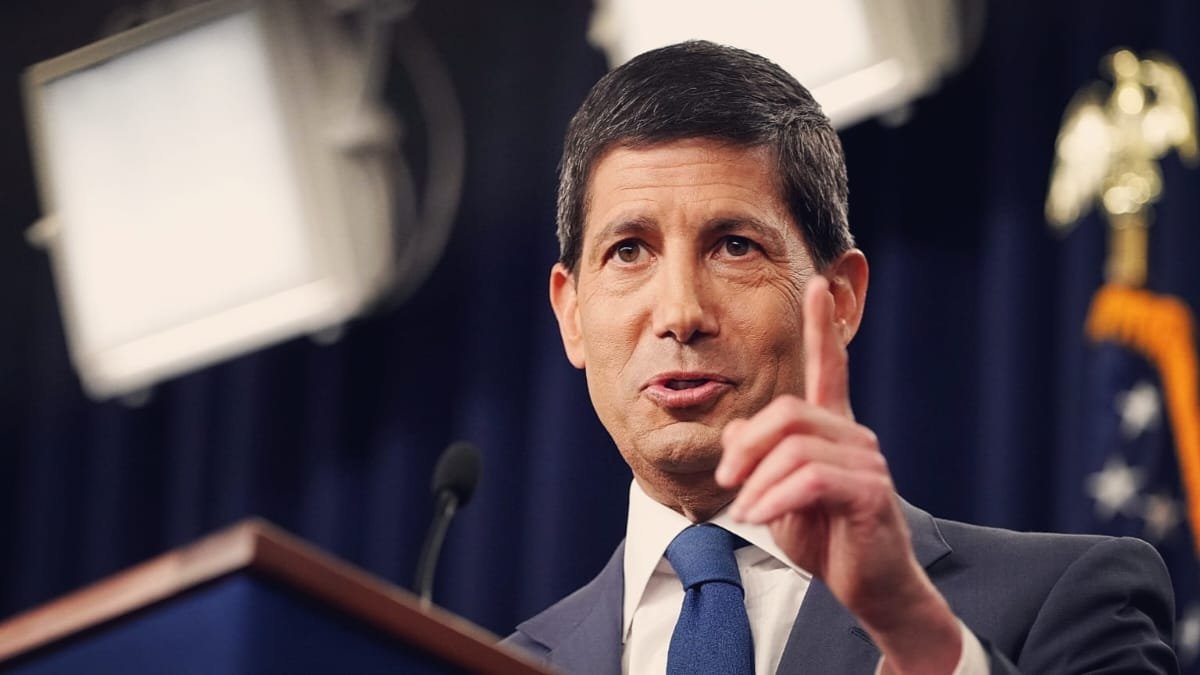
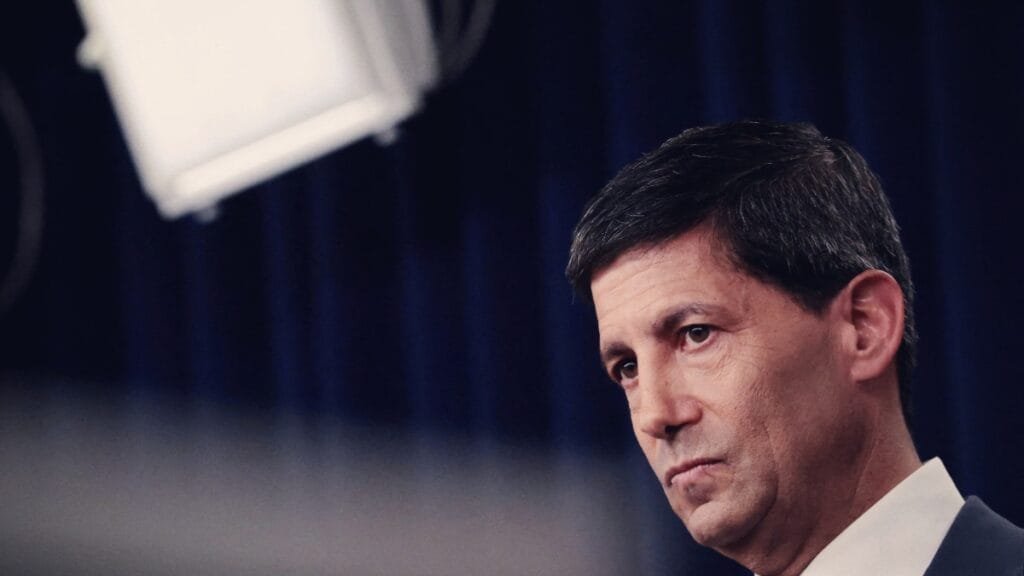
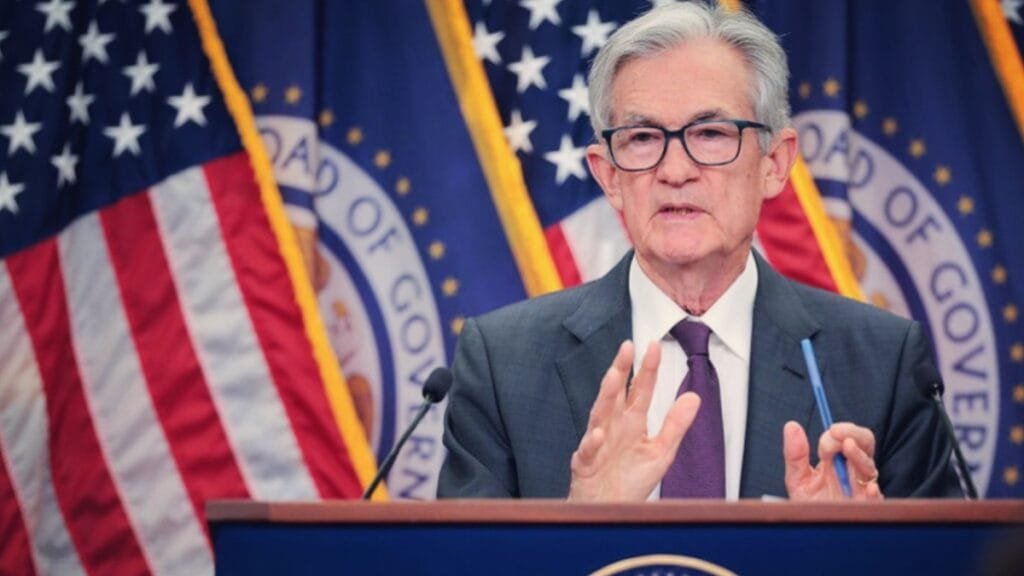
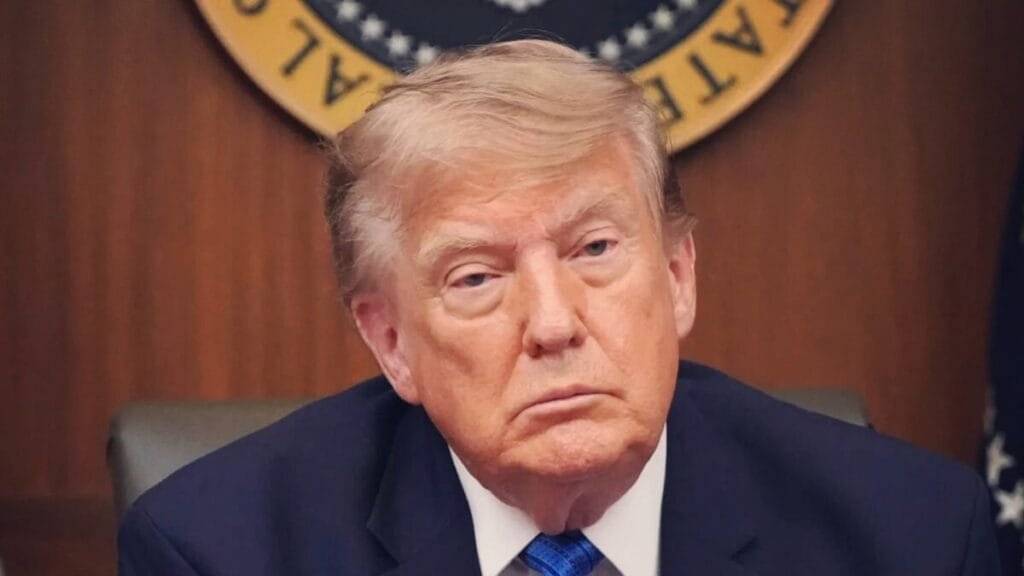
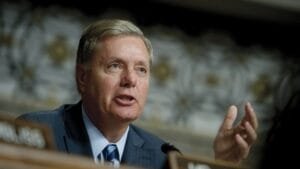
Federal Reserve Chair Kevin Warsh delivered his first major policy address at the Jackson Hole Economic Symposium on August 28, 2026, in Wyoming, sending clear signals about his approach to fighting inflation and reshaping central bank communication.
Warsh, who took office on May 22, 2026, used the prestigious platform to address persistent inflation concerns and outline his vision for the Fed’s role in the economy. Speaking in the mountainous backdrop of Grand Teton National Park, he declared that inflation remains “too high” and hinted at the possibility of future interest rate hikes to bring price increases back to the central bank’s 2% target.
The speech comes at a pivotal moment for the US economy. Inflation has cooled slightly in recent months but remains above the Fed’s goal, while the bond market has experienced significant volatility. Three policymakers dissented at the July Fed meeting, favoring tighter policy, and traders have increased expectations for a rate hike at the September meeting.
Warsh’s address was particularly significant because he has taken a notably different approach to central bank communication than his predecessors. Since assuming the chairmanship, he has offered far fewer comments about the economic outlook and inflation, creating uncertainty among investors and economists. His Jackson Hole speech was widely viewed as an opportunity to clarify his policy framework and demonstrate the Fed’s independence from political pressure.
The stakes were high not just for financial markets but for everyday Americans. Surveys show affordability of necessities such as gas, groceries, and housing remains a top concern heading into the midterm elections. The Fed’s decisions on interest rates directly impact mortgage borrowing costs and the overall cost of living.
Kevin Warsh’s Background and Path to the Fed Chairmanship
Kevin Warsh brings decades of experience in finance, government, and economic policy to his role as Federal Reserve Chair. His journey from Wall Street to the Fed chairmanship spans nearly 30 years and includes key positions during some of the most challenging periods in modern financial history.
Born on April 13, 1970, in Albany, New York, Warsh grew up in the nearby suburb of Loudonville, the youngest of three children. His father ran several companies, while his mother worked as a journalist and freelance writer. He attended Shaker High School, where he played tennis and competed in state championships.
Warsh earned his bachelor’s degree in public policy from Stanford University in 1992 before receiving a law degree from Harvard Law School in 1995. During his law school years, he also studied market economics and economic policy at Harvard Business School and the Massachusetts Institute of Technology. Despite his prestigious academic credentials, Warsh has said much of what he understands about the economy comes from his upstate New York roots, telling the State University of New York at Albany’s School of Business in 2007, “I learned much of what I need to know about the real economy in my first 18 years here.”
After graduating from law school, Warsh went to Wall Street, working for Morgan Stanley from 1995 to 2002. During his seven-year tenure, he worked in mergers and acquisitions and became an executive director and vice president. His Wall Street experience gave him firsthand knowledge of financial markets and prepared him for his later role as an intermediary during the financial crisis.
In 2002, Warsh left Morgan Stanley to join the Bush administration, serving as special assistant to the president for economic policy and as executive secretary of the National Economic Council. He also served as a member of the President’s Working Group on Financial Markets during this period.
In 2006, President George W. Bush nominated Warsh to become one of the seven governors of the Federal Reserve Board. At age 35, he became the youngest person ever to serve in that role. His appointment reflected his growing reputation as a conservative voice on monetary policy and his experience navigating both Wall Street and Washington.
During the 2008 financial crisis, Warsh played a crucial behind-the-scenes role. He worked closely with then-Fed Chair Ben Bernanke and future Treasury Secretary Timothy Geithner to manage the crisis. Using his Wall Street connections, he helped facilitate JPMorgan Chase’s acquisition of Bear Stearns and negotiated ways for financial institutions to survive the meltdown.
Former Goldman Sachs CEO Lloyd Blankfein said Warsh remained composed at “chaotic moments,” while former Fed vice chair Don Kohn credited him with knowing when bankers were delivering real information versus “arguing their book.”
Warsh also advocated against a bailout of Lehman Brothers, writing in an internal message, “I hope we don’t protect anything.” His posture placed him on the side of officials who believed allowing Lehman to fail would restore market discipline, though the outcome proved catastrophic when the bankruptcy triggered a global credit freeze.
As the crisis subsided, Warsh increasingly expressed concern about the Fed’s quantitative easing policies. He opposed the Fed’s second round of bond buying, known as QE2, arguing that the emergency phase had passed and continued stimulus risked fueling future inflation. His term as governor wasn’t set to end until January 2018, but Warsh took the unusual step of resigning in March 2011, a move widely interpreted as a protest against the bond-buying program.
After leaving the Fed, Warsh became a distinguished visiting fellow in economics at Stanford University’s Hoover Institution and a lecturer at the Stanford Graduate School of Business. He also worked as a partner at Duquesne Family Office.
President Trump appointed Warsh as Fed Chair on May 22, 2026, succeeding Jerome Powell. The appointment reflected Trump’s dissatisfaction with Powell over the central bank’s reluctance to slash interest rates. Warsh was among the candidates for the Fed chair job in 2017, but Trump passed him over in favor of Powell, explaining that Warsh looked too young for the job.
Warsh is also married to Jane Lauder, the daughter of billionaire Estée Lauder cosmetics heir Ronald Lauder, a Republican mega-donor and former US ambassador to Austria. The marriage connects Warsh to one of the country’s most prominent political donor families and adds to his Washington and Wall Street connections.
Warsh’s New Communication Strategy
Warsh’s New Communication Strategy: Less Is More
Since taking office, Kevin Warsh has fundamentally changed how the Federal Reserve communicates with financial markets and the public. His approach has been described as much less talkative than his predecessors, creating uncertainty among economists and investors who have grown accustomed to regular policy guidance.
Warsh has said he does not want to provide “forward guidance” about whether the Fed will hike or cut rates at upcoming meetings. He argues that forward guidance limits the Fed’s flexibility by committing it to specific policy paths. He also believes financial markets have become too dependent on such guidance, creating what he describes as a “hall of mirrors” where market participants primarily look to the central bank to determine their next trading move.
At his last press conference in July 2026, Warsh sowed confusion by ducking repeated questions on whether the Fed would hike its benchmark interest rate if inflation stays high. When asked what gauge he would use to determine if inflation is at the 2% target, he cited the Fed’s current preferred measure but then suggested that could change next year, after task forces he had appointed make recommendations.
Warsh told reporters that “any central banker is more inclined” to raise rates “when he or she sees underlying inflation moving higher,” which some economists said was in the ballpark of the broader outlook they were looking for. But he hasn’t said whether he thinks “underlying inflation” is worsening or how exactly he is measuring that.
When asked whether he would support higher rates to combat stubborn inflation, Warsh said they “could well be part of that solution,” but then added, “I wouldn’t say it’s in isolation.” Some Fed watchers took this to mean he would consider other measures, such as reducing the Fed’s vast holdings of Treasury bonds, which could push up longer-term borrowing costs.
Warsh’s new approach has drawn criticism from both economists and politicians. Massachusetts Senator Elizabeth Warren sent a letter to Warsh before his Jackson Hole speech, calling on him to increase transparency.
“I urge you to use your scheduled speech at Jackson Hole to start being transparent with the public and start proving you are not Donald Trump’s sock puppet,” Warren wrote. She noted that since Warsh assumed the chair’s post, he has reduced, not enhanced, the transparency of communications from the central bank, “which has further eroded your credibility in the eyes of the public and market participants.”
David Wilcox, a senior fellow at the Peterson Institute for International Economics, said, “What he needs to do is to clarify the conceptual framework he’ll bring to directing monetary policy. He’s refused to provide even that amount of illumination.”
At Jackson Hole, Warsh defended his approach, arguing that in normal conditions, the role of forward guidance should be limited and have a clear scope. “Transparency in communication about future policy decisions is not a virtue in itself. Communication must support the Fed’s primary responsibility: setting monetary policy correctly,” he said. He warned that providing too much information about the policy decision-making process and committing too far to future decisions could lead markets, businesses, and households to make incorrect decisions.
The Jackson Hole Speech: Hawkish Tone on Inflation
Warsh’s Jackson Hole address delivered the clarity investors had been seeking, while carefully avoiding specific policy commitments. His words signaled a hawkish stance on inflation without explicitly promising a rate hike.
Warsh declared that inflation remains “too high” and that he is not convinced underlying price trends have meaningfully improved. “While this summer’s readings were better than expected, they do not tell me that underlying trends have meaningfully improved,” Warsh stated. “We must be confident that underlying inflation is moving to our objective, clearly and at sufficient speed. Otherwise, we have work to do. That’s our job … our mandate, and our charge to keep.
The chairman stopped short of indicating whether the current economic environment needs increased interest rates, leaving future policy decisions open. “I stand here today committed to a discipline, not to a decision,” he said. He emphasized that interest rates remain the Fed’s “predominant tool” for achieving its mandate, though he did not signal support for a rate hike at the September meeting.
Warsh also addressed financial conditions, stating they are currently not restrictive. This assessment reinforced expectations that policy could stay tighter for longer, as financial conditions need to be restrictive to bring inflation down to target.
The speech received a generally positive reception from market participants. According to information, economists noted that Chairman Warsh gave the markets what they wanted, which was more detail on his views about the current data, particularly inflation. Observers noted that while he did not tip his hand regarding future policy actions, the speech seemed like a win-win for Warsh and the markets.
Warsh’s remarks increased market expectations for a rate hike. According to information, traders saw a significant chance of a Fed rate hike at the September 15-16 meeting, up from roughly one-in-three before the speech. A hike by the December meeting had been priced with even higher probability before his remarks.
The speech also had immediate market impacts. Yields for two-year Treasuries rose by as much as nine basis points, while 30-year rates slipped two basis points. Bitcoin slipped back below key levels following Warsh’s inflation pledge, as the digital currency moved with other rate-sensitive assets.
Warsh struck an optimistic tone about the broader economy, saying he was “impressed by the overall performance of the economy.” He thanked his fellow policymakers and attendees for the “warm reception” he received during his first 100 days as Fed chair, joking about the views he had received from people in the room, both solicited and unsolicited.
Schmid said in an interview on the eve of Jackson Hole
Interest Rate Outlook and Inflation Concerns
The Federal Reserve has kept its benchmark policy rate in the 3.50% to 3.75% range since December 2025. Three policymakers dissented at the July meeting, favoring tighter policy. Kansas City Fed President Jeff Schmid, who is not a voting member of the Federal Open Market Committee this year, dissented twice last year against rate cuts, arguing inflation remained too high.
Schmid said in an interview on the eve of Jackson Hole that interest rates are too accommodative amid inflation that remains too hot. “We haven’t achieved our mandated goal of 2%,” Schmid told reporters. “I’m a very strong believer that if we’re going to have a scorecard for the Fed, it’s got 2% inflation, it’s got stable prices on it.
We’re not there.” He noted three “thoughtful” dissents at the Fed’s July policy meeting and said he would have sided with the narrative that inflation is too high and action is needed now to prevent more severe rate hikes later.
Inflation has cooled after spiking in May and June from higher gas prices, but it remains above the central bank’s 2% target. The July reading showed inflation rose more than economists had expected, reinforcing expectations that rates may have to stay restrictive through the end of the year. Another information showed the US economy grew 1.5% in the second quarter.
The core Personal Consumption Expenditures (PCE) index, the Fed’s preferred inflation measure, rose 3.3% in July, according to the latest data. Core PCE was above the 2.8% level recorded in February 2026, prior to the conflict with Iran.
Investors are heading into the next policy meetings with one central question: How far is Warsh willing to go to prove the central bank is still serious about inflation? Traders are pricing in no change in borrowing costs at the Fed’s September meeting but see a significant probability of at least a 25-basis-point rate increase by December as Middle East tensions keep oil prices elevated and inflation remains sticky.
The dollar has found support from rate expectations, though the currency’s gains could be capped if the Fed avoids further hikes this year. Gold has drawn support from concerns about dollar debasement and uncertainty surrounding Fed policy. Strategists have described Jackson Hole as a key risk event for both bonds and the dollar, with the Treasury’s intervention in long-term bond markets adding complexity to the Fed’s messaging.
Treasury Intervention and Bond Market Dynamics
Kevin Warsh’s task at Jackson Hole became more complicated following the US Treasury’s recent intervention in the bond market. Last week, the Treasury said it would increase buybacks of long-term government debt, at least doubling the maximum size of its repurchase operation to $4 billion from September 9. The move came after long-term borrowing costs touched levels close to a two-decade high.
The Treasury’s intervention has raised questions about the boundary between debt management and monetary policy. The Treasury says the move is aimed at improving market functioning and reducing pressure in long-dated bonds. However, investors are watching whether the Fed will reinforce or resist that message.
The issue is not new. In 2011, the Fed used “Operation Twist” to sell short-term Treasury securities and buy longer-dated bonds to push down borrowing costs. That program was justified under the Fed’s employment and inflation mandate, but it also lowered Washington’s financing costs. Warsh is now facing a different version of the same tension.
The Treasury is already acting on the long end of the bond market, and investors want to know whether the Fed will stay focused on inflation, give clearer guidance, or allow higher long-term yields to do part of the tightening.
According to market analysts, there were three reasons the stakes were high for Warsh’s speech. First, it would be Kevin Warsh’s first as Fed Chair at a time when inflation remains stubbornly above target and long-term yields have been under pressure. Second, Warsh is trying to change the way the Fed functions and communicates its policy to the market, or whether it communicates at all.
Third, investors are questioning how the Fed will respond to the Treasury’s intervention in the bond market, which could interfere with the Fed’s policy path and the transmission of its policy to the economy.
If Warsh appears too close to the Treasury’s debt-management agenda, gold may benefit and long-end bond volatility could return. A more hawkish stance from Warsh could support the dollar and push short-term yields higher.
Political Pressures and Fed Independence
Political Pressures and Fed Independence
Warsh faces significant political pressures as he navigates monetary policy. President Donald Trump has continued to call for lower interest rates, even as inflation remains above target. While Trump has defended Warsh, whom he appointed, he has criticized other Fed officials for supporting higher rates.
The political backdrop has intensified concerns about Fed independence. According to economic commentary, politics are adding to the Fed’s credibility problems. Observers noted that this is why his Jackson Hole speech mattered so much, as it was an opportunity for Warsh to demonstrate his and the Fed’s independence from political interference.
Warsh has rejected speculation that he would be more willing to do Trump’s bidding than his predecessor Jerome Powell. However, markets remain sensitive to any perception that the Fed is being influenced by political considerations.
Adding to the political complexity, Trump has renewed his efforts to remove Fed Governor Lisa Cook, who was appointed by former President Joe Biden. Replacing Cook would enable Trump to appoint a majority of the seven-member board. Trump tried to fire her last year but was temporarily blocked by the Supreme Court.
The Supreme Court in June ruled that Cook was entitled to stay on as Fed governor while she fights the allegations, writing that Trump “failed to afford Cook the procedural protections to which she was entitled by statute.” Despite the ruling, Cook received a letter from the White House earlier this month that accused her of falling “well short of the standard” required of a sitting Fed governor and requested a written response to the same mortgage fraud allegations as before. Cook’s lawyers called the allegations “as baseless now as they were a year ago.
Warren’s letter to Warsh highlighted the political dimension, criticizing him for reducing transparency and suggesting he needed to prove he is not “Donald Trump’s sock puppet.” The political pressure surrounding the Fed creates additional challenges for Warsh as he tries to establish his credibility with markets and the public.
What Comes Next: Key Dates and Decisions
The path forward for Warsh and the Federal Reserve involves several key dates and data releases that will shape monetary policy decisions.
August jobs, unemployment, and consumer inflation data are due early next month, giving policymakers fresh data before their September meeting. The Fed’s next policy meeting is scheduled for September 15-16, where the central bank will decide whether to raise interest rates or hold them steady.
Warsh’s remarks at Jackson Hole have increased focus on whether persistent inflation could prompt the Fed to raise rates. According to market reports, the odds of a rate hike at the September meeting rose to above 50% following his speech, up from around 36% before.
The Fed chair’s first 100 days in office have been marked by significant changes in communication style and a renewed focus on inflation fighting. Warsh has appointed task forces to look at things like data sources and inflation measurement, and he has suggested that the Fed’s preferred inflation gauge could change next year.
Warsh will also need to continue addressing the complex relationship between the Treasury and the Fed regarding bond market dynamics. The Treasury’s increased buybacks of long-term debt have raised questions about the coordination between fiscal and monetary policy, and Warsh will need to maintain the Fed’s policy independence while working within the broader government framework.
For investors, the key question remains whether Warsh’s hawkish rhetoric will translate into actual rate hikes. Markets will be watching economic data closely, particularly inflation and employment numbers, for signals about the Fed’s next move. The dollar, bond yields, and gold are all expected to react sharply to any shift in Warsh’s tone or policy signals.
For the American public, the Fed’s decisions have direct implications for the cost of living. Surveys show most Americans still see the affordability of necessities such as gas, groceries, and housing as a top economic issue. Warsh’s commitment to fighting inflation suggests that the Fed is willing to accept higher interest rates if necessary to bring price increases under control, even if that means slower economic growth in the short term.
रश्मि शर्मा, पत्रकार व लेखिका। 8+ वर्षों का अनुभव।
विशेषज्ञता: नेशनल और अंतरराष्ट्रीय राजनीति, क्रिकेट-ओलंपिक, शेयर बाजार, अर्थव्यवस्था, AI-टेक, विज्ञान, स्वास्थ्य नीति व अर्थव्यवस्था, मनोरंजन।
जटिल खबरों को सरल भाषा में समझाना मेरी पहचान।