
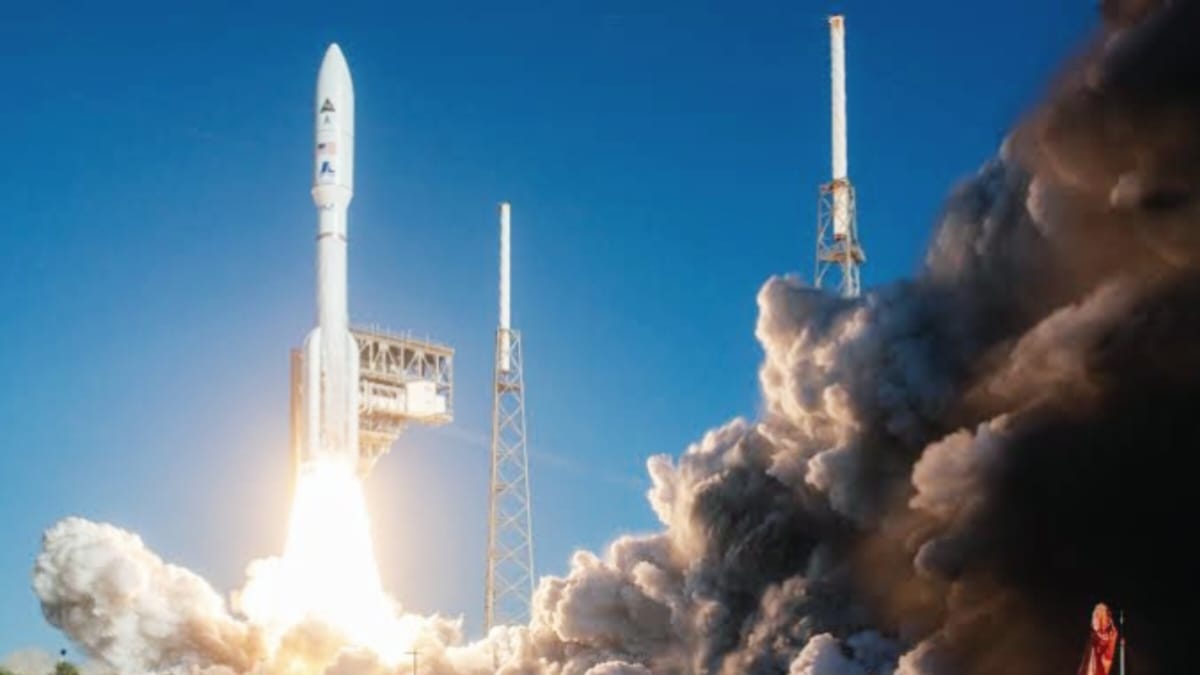
The Atlas V rocket has been a cornerstone of American space launches for over two decades, delivering critical satellites, planetary probes, and national security payloads with remarkable consistency. As one of the most dependable expendable launch vehicles, it has powered missions that expand our understanding of the universe and connect the world. With its final flights wrapping up in 2026, including the recent Amazon Leo 8 mission on July 2, this article explores the full story of Atlas V, from its engineering roots to its lasting impact.
The Origins and Development of Atlas V
Atlas V traces its lineage to the historic Atlas rocket family, which dates back to the early days of the Cold War and America’s space program. Developed by Lockheed Martin as part of the U.S. Air Force’s Evolved Expendable Launch Vehicle (EELV) program in the late 1990s, it represented a modern evolution designed for greater flexibility, reliability, and cost-effectiveness compared to its predecessors.
The rocket officially entered service with its maiden flight on August 21, 2002, successfully carrying the Hot Bird 6 communications satellite into orbit. United Launch Alliance (ULA), a joint venture between Lockheed Martin and Boeing, took over operations in 2006, refining the vehicle for a wide range of missions. Production of new Atlas V rockets ended in 2024, but a handful of vehicles remained for final launches as the industry transitions to newer systems.
What sets Atlas V apart is its modular design. Engineers created it to handle diverse payload requirements without starting from scratch for every mission. This adaptability has made it a go-to choice for government, commercial, and scientific customers alike. Its track record speaks volumes: over 110 launches with an outstanding success rate, making it one of the most reliable rockets in history.
Design and Technical Specifications
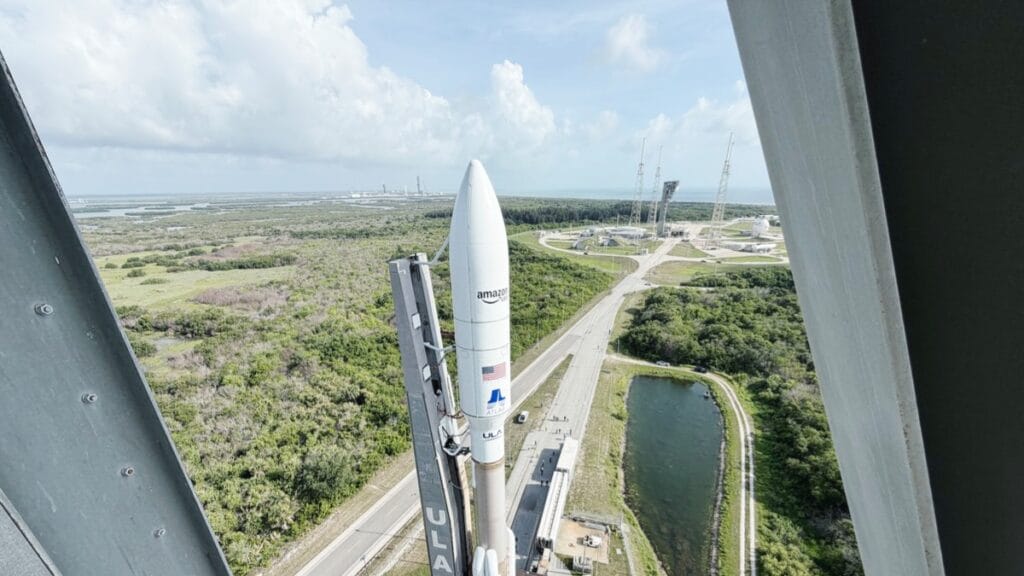
At its core, the Atlas V features a Common Core Booster (CCB) first stage powered by a single Russian-designed RD-180 engine, which burns RP-1 (refined kerosene) and liquid oxygen. This engine delivers massive thrust, around 860,000 pounds at liftoff, and offers excellent throttling capabilities for precise control during ascent.
To boost performance, the rocket incorporates up to five Northrop Grumman solid rocket boosters (SRBs), depending on the configuration. The upper stage is the reliable Centaur, powered by one or two RL10 engines using liquid hydrogen and oxygen for efficient in-space propulsion. Payload fairings come in 4-meter or 5-meter diameters and varying lengths to accommodate different spacecraft.
Configurations are denoted by a three- or four-digit code, such as 551, which indicates a 5-meter fairing, 5 SRBs, and a single-engine Centaur. The 551 variant is among the most powerful, capable of lifting heavy payloads to low Earth orbit (LEO) or more demanding orbits. Overall, Atlas V can deliver between about 8,000 to over 20,000 kg to LEO, depending on the setup, and has proven itself for geostationary transfer orbits (GTO) as well.
The rocket stands roughly 58 to 62 meters tall and weighs hundreds of thousands of kilograms at liftoff. Its design emphasizes structural stability and precise avionics, contributing to its near-perfect reliability. Unlike reusable systems, Atlas V is expendable, prioritizing mission success for high-value payloads where every kilogram and second of performance counts.
Key Missions and Achievements
Atlas V has supported an impressive array of landmark missions. Early on, it launched the New Horizons probe in 2006, which became the first spacecraft to visit Pluto and later explored objects in the Kuiper Belt. This high-energy trajectory required the rocket’s powerful upper stage capabilities.
NASA’s Mars exploration efforts also benefited greatly. The Mars Reconnaissance Orbiter flew on Atlas V in 2005, followed by the Curiosity rover in 2011 and Perseverance in 2020. These missions advanced our knowledge of the Red Planet, searching for signs of ancient life and preparing for future human exploration.
The rocket has also been crucial for Earth observation and science. It lofted Landsat 9 for continuous monitoring of our planet’s surface and the Solar Orbiter for studying the Sun. Commercial successes include communications satellites for companies worldwide, while national security missions for the U.S. Space Force and National Reconnaissance Office have relied on its proven performance for sensitive payloads.
In recent years, Atlas V supported Boeing’s Starliner crewed spacecraft tests, marking a return to human spaceflight capabilities from Florida. Its versatility extended to asteroid sample return missions like OSIRIS-REx and even secretive X-37B spaceplane flights. Each success reinforced Atlas V’s reputation as a workhorse that delivers when it matters most.
The Role in Modern Commercial Space and Amazon Leo Launches
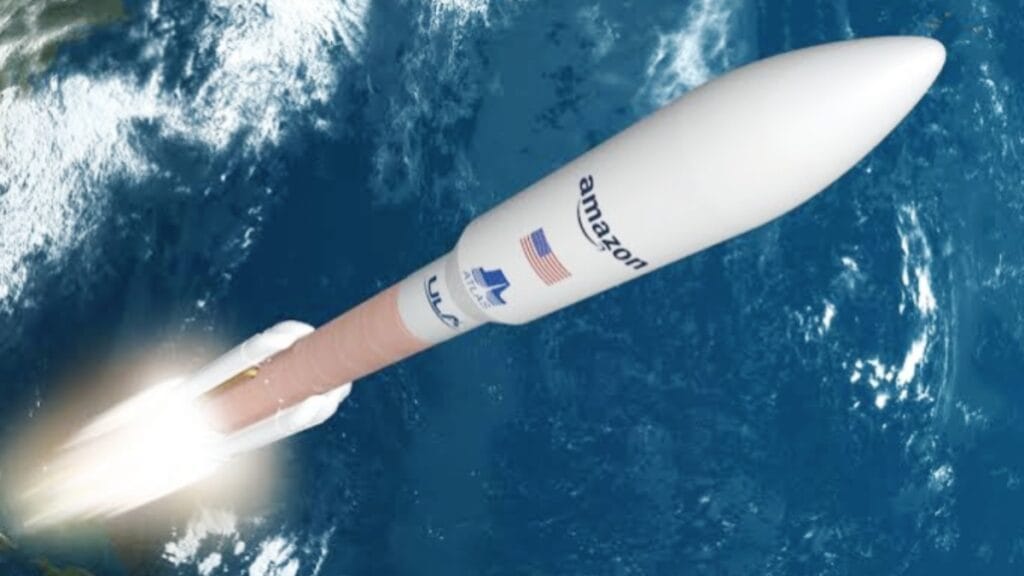
Atlas V has played a significant part in the growing commercial space sector. One of its most recent high-profile contributions is launching satellites for Amazon’s Leo constellation (formerly Project Kuiper), a low Earth orbit broadband network aimed at providing high-speed internet to underserved communities globally.
In 2026, ULA completed multiple Leo missions with Atlas V, culminating in the LA-08 flight on July 2, which deployed 29 satellites using the powerful 551 configuration. This marked the final planned Atlas V launch for Amazon and the end of the 551 variant’s service. These missions carried substantial payloads, around 18 tons in some cases, highlighting the rocket’s heavy-lift prowess for LEO deployments.
Future Leo satellites will transition to ULA’s newer Vulcan Centaur rocket, which can handle larger batches more efficiently. Atlas V’s involvement helped Amazon ramp up its constellation deployment while proving the rocket’s continued relevance in the competitive satellite internet market alongside players like Starlink.
These launches not only advance connectivity but also demonstrate how established vehicles support ambitious mega-constellation projects, bridging the gap as newer, more cost-effective options mature.
Transition to Vulcan Centaur and the Future of ULA
As Atlas V concludes its service, ULA is fully shifting to the Vulcan Centaur, its next-generation launcher. Vulcan addresses key industry shifts, including the phase-out of the Russian RD-180 engine due to geopolitical and policy reasons. It uses Blue Origin’s BE-4 engines on the first stage and an upgraded Centaur V upper stage, promising higher performance, lower costs, and greater flexibility.
Production of Atlas V ended in 2024, with remaining vehicles completing contracted missions. Vulcan has already begun taking over national security and commercial roles, aiming to maintain ULA’s high reliability standards while competing in a market dominated by reusable rockets.
The transition reflects broader changes in space access: greater emphasis on domestic manufacturing, sustainability, and scalability. While Atlas V’s retirement marks the end of an era, its legacy of over 100 successful flights provides a strong foundation for ULA’s future endeavors. Many in the industry view this as a natural evolution rather than an end, with lessons from Atlas V informing safer, more efficient launches ahead.
Why Atlas V Remains a Benchmark in Rocketry
The enduring success of Atlas V stems from meticulous engineering, rigorous testing, and a focus on mission assurance. Its near-flawless record has built trust among customers who cannot afford failures, such as those launching expensive scientific instruments or critical defense assets.
Beyond technical achievements, Atlas V symbolizes America’s commitment to space leadership. From interplanetary voyages to everyday applications like global internet access, it has quietly enabled progress that benefits humanity. As we watch the final launches, it’s worth appreciating how this rocket helped usher in a new age of space utilization.
In summary, the Atlas V story is one of innovation, reliability, and adaptation. Its contributions will continue to influence spaceflight long after its last flight, inspiring the next generation of launch vehicles and explorers. Whether you’re a space enthusiast or simply curious about how satellites reach orbit, Atlas V stands as a powerful example of what dedicated engineering can accomplish.