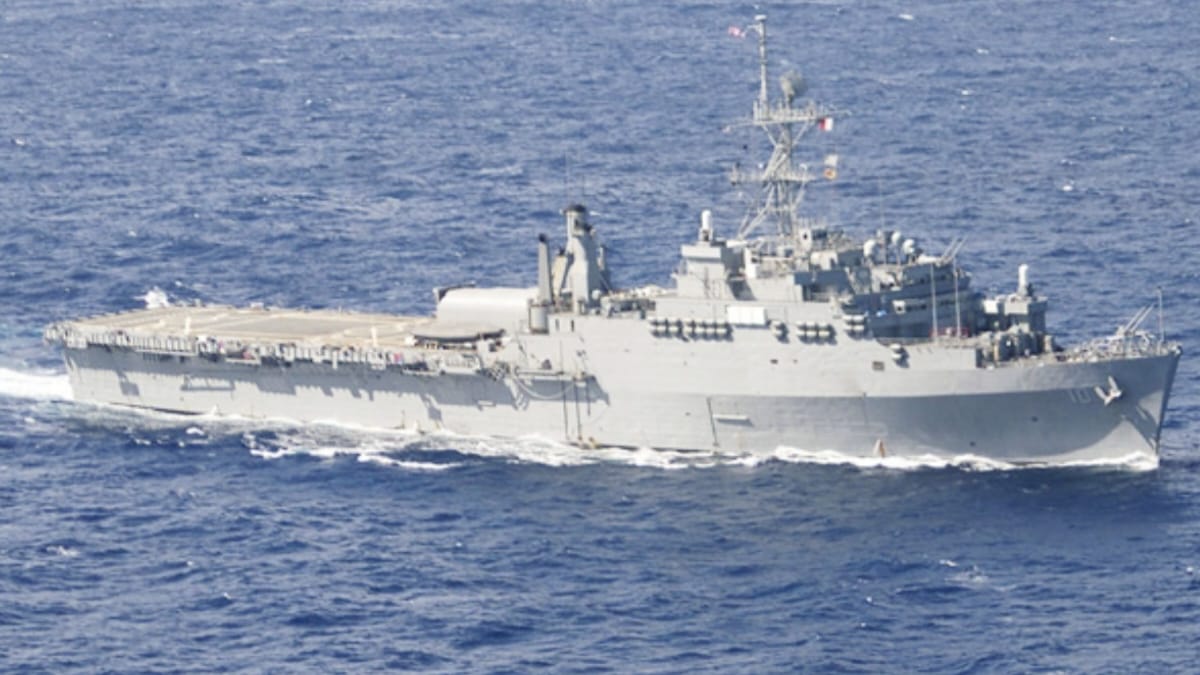
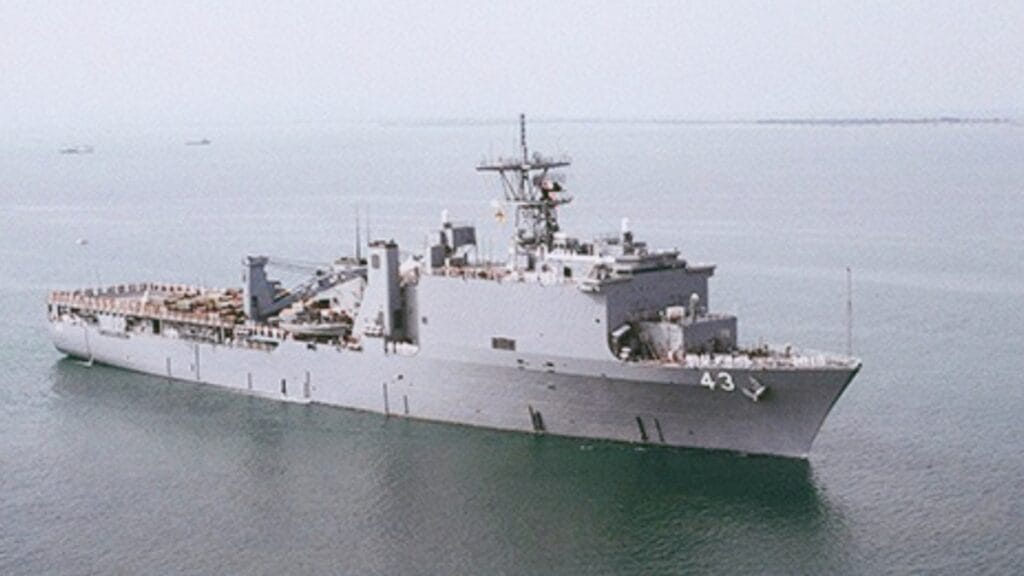
The USS Juneau (LPD-10) was an Austin-class amphibious transport dock that served the United States Navy with distinction for nearly four decades. From its commissioning in 1969 to its final mission as a target vessel in 2026, the Juneau played a vital role in some of the most significant military and humanitarian operations of the late 20th and early 21st centuries. This article traces the complete deployment history of this remarkable ship, exploring its service in Vietnam, the Persian Gulf, humanitarian crises, and its ultimate fate in the Philippine Sea.
Origins, Construction, and Early Years (1965-1970s)
The USS Juneau was ordered on 23 May 1963, with her keel laid down by Lockheed Shipbuilding and Construction Company in Seattle, Washington, on 23 January 1965. She was launched on 12 February 1966, sponsored by Mrs. William A. Egan, the wife of the Governor of Alaska, and officially commissioned on 12 July 1969.
Throughout the 1970s, the Juneau completed five deployments to the Western Pacific, demonstrating the ship’s critical role in projecting American naval power during the Cold War era. This included eight trips into Vietnamese waters during the Vietnam War, for which the ship earned five battle stars for its efforts in support of U.S. military operations in Southeast Asia.
One of the Juneau’s most notable early achievements came in February 1976, when it conducted the first AV-8A Harrier landing on a Pacific Fleet LPD. This demonstrated the ship’s versatility and paved the way for future amphibious operations involving vertical takeoff and landing aircraft.
On 4 July 1976, the Juneau arrived in its namesake city of Juneau, Alaska, with a complement of Marines from 1st Battalion, 5th Marines, as part of the United States Bicentennial celebrations. The ship also made a port call to Vancouver, British Columbia, that same year, highlighting its role in fostering international relations during peacetime.
The ship’s first major deployment in 1970 was the Keystone Robin Alpha operation, where it transported the 9th Engineer Battalion and 3rd Military Police Battalion back to the United States from Da Nang, South Vietnam. This marked the beginning of a long tradition of supporting Marine Corps operations across the Pacific.
USS Juneau Exxon Valdez
The 1980s: A Decade of Extensive Deployments and the Exxon Valdez Crisis
The 1980s saw the Juneau complete seven full deployments, operating extensively throughout the Pacific theater. The ship’s 1988 deployment is particularly well-documented, showing the comprehensive nature of its operations.
On 14 January 1988, the Juneau deployed as a unit of Amphibious Ready Group Alpha, with a scheduled return date of 14 June. The group included the USS Pelelieu (LHA 5), USS Bristol County (LST 1198), and USS Fort Fisher (LSD 40). After arriving in Subic Bay, Republic of the Philippines, on 7 February, the group participated in a Seventh Fleet Exercise, Valiant Usher (88-1), off Subic Bay from 8 through 14 February.
The deployment continued with significant exercises and port visits. The ship visited Hong Kong from 5 through 9 March 1988, allowing crew members and Marines to experience liberty in the vibrant city. From 17 March through 4 April, the Juneau participated in Team Spirit 88, an annual exercise conducted off the coast of Pohang, Korea, which brought together U.S. and South Korean forces to demonstrate the United States’ commitment to defending the Republic of Korea.
The Juneau then participated in Valiant Usher (88-3) in the Korean Straits from 10 through 16 May, followed by a visit to Hong Kong and further exercises including Valiant Usher (88-4) off the island of Tinian. These exercises were designed to enhance the amphibious warfare capabilities of the Navy and Marine Corps team, ensuring readiness for any potential conflict in the region.
On 14 July 1988, the Juneau returned to San Diego, marking the completion of its tenth deployment to the Pacific. Following this, the ship underwent inspections, training exercises, and maintenance, including an Operational Propulsion Plant Re-Examination and a Phased Maintenance Availability.
One of the most significant events in the Juneau’s history occurred in April 1989, when the ship received emergency orders to Prince William Sound in response to the Exxon Valdez oil spill. The Juneau was the first naval vessel on the scene and assumed the duties of command and control ship for Joint Task Force Alaska. The ship left its home port of San Diego on 18 April and arrived in Alaska on 24 April 1989.
The ship provided essential services including berthing, communications, transportation (both surface and air), food, medical services, and laundry for over four hundred civilian cleanup workers. The Juneau also hosted Vice President Dan Quayle during his visit to Prince William Sound, where he toured an oil-soaked beach and gave a speech that was televised nationwide. On 31 May, the Juneau was relieved of its command duties by the USS Cleveland (LPD-7) and returned to San Diego on 12 June 1989. This mission demonstrated the versatility of amphibious vessels beyond their traditional combat roles.
USS Juneau Desert Storm
Operation Desert Shield and Desert Storm (1990-1991)
Following the Iraqi invasion of Kuwait and the initiation of Operation Desert Shield, the Juneau sailed with twelve other ships of Amphibious Group Three in December 1990 to participate in Operation Desert Storm. Joining with ships from Amphibious Group Two, the Juneau was a member of the largest amphibious task force since the United Nations assault on Inchon, South Korea, during the Korean War.
The amphibious task force was positioned in the Persian Gulf, ready to conduct a massive amphibious assault if ordered. This strategic positioning forced Iraqi forces to divert significant resources to defend the Kuwaiti coastline, weakening their defensive positions elsewhere.
On 24 February 1991, the Juneau off-loaded its equipment and ammunition in record time and landed its embarked troops at Ras Al Mishab, Saudi Arabia. From this position, the Marines would assault Iraqi positions in southern Kuwait, contributing to the successful liberation of Kuwait during Operation Desert Storm. The speed and efficiency of the off-load operation were critical to the success of the ground campaign.
The ship’s crew worked tirelessly around the clock to ensure that all equipment and supplies were moved ashore as quickly as possible. This included landing vehicles, artillery, ammunition, food, water, and other essential supplies needed to sustain the Marine forces as they advanced into Kuwait.
Humanitarian Operations: Operation Sea Angel and Operation Restore Hope
In May 1991, shortly after the conclusion of Desert Storm, the Juneau proceeded to Bangladesh to assist in Operation Sea Angel, providing relief after a disastrous cyclone that had devastated the region. The cyclone had caused massive flooding, destroyed crops, and displaced hundreds of thousands of people, creating a humanitarian crisis of immense proportions.
The Juneau transported and delivered over 2,000 tons of relief supplies to the affected areas, including food, water, medical supplies, and temporary shelter materials. The ship’s helicopters were instrumental in delivering supplies to remote areas that were inaccessible by road due to the flooding.
During its fourteenth deployment, the Juneau was again diverted, this time to the coast of Somalia in support of Operation Restore Hope. Her embarked Marines ensured the security of shipments of food supplies to the people of Somalia, who were suffering from famine amid civil war. On 9 December 1992, the Juneau landed the 15th Marine Expeditionary Unit in Mogadishu, who then secured the delivery of food to the starving population.
These humanitarian missions demonstrated that the Juneau was not merely a warship but a versatile platform capable of delivering aid and saving lives in times of natural disaster and humanitarian crisis. The ship’s ability to quickly transition from combat operations to humanitarian assistance was a testament to the training and adaptability of its crew.
USS Juneau Sasebo Japan
Forward Deployment to Japan and East Timor Mission (1999-2000)
The Juneau was homeported in San Diego, California, until 30 July 1999, when she relieved USS Dubuque (LPD-8) as part of the forward-deployed naval forces. After this date, she was homeported in Sasebo, Japan.
From June to September 1999, the Juneau participated in the first “SHIP-SWAP” with her sister ship Dubuque, where each ship’s crew remained in their original home ports. This innovative program allowed Dubuque to return to San Diego while the Juneau assumed the forward-deployed role in Japan. The swap required extensive coordination and planning, as both ships had to ensure that all equipment and supplies were properly transferred.
The forward deployment to Japan positioned the Juneau closer to potential flashpoints in East Asia, allowing for faster response times in the event of a crisis. The ship participated in numerous exercises with regional allies, strengthening military partnerships and enhancing interoperability.
In January 2000, the Juneau was deployed to East Timor as part of the Australian-led INTERFET peacekeeping taskforce, contributing to stability in the region following the country’s independence referendum. The ship transported Australian and other international peacekeeping forces to the region, providing essential support for the stabilization mission.
The East Timor mission was particularly significant as it demonstrated the growing importance of international peacekeeping operations in the post-Cold War era. The Juneau’s participation in this mission highlighted the Navy’s commitment to supporting global stability and democracy.
The Myanmar Cyclone Nargis Mission (2008)
During the 2008 Myanmar Cyclone Nargis crisis and the subsequent Operation Caring Response aid mission, the Juneau, as part of the USS Essex’s amphibious group along with the USS Harpers Ferry and USS Mustin, stood by off Burma from 13 May to 5 June 2008, waiting for the Myanmar junta government to permit US aid to its citizens.
Cyclone Nargis had struck Myanmar on 2 May 2008, causing catastrophic damage and resulting in over 130,000 deaths. The international community responded swiftly with offers of aid, but the Myanmar government was reluctant to allow foreign military assets into the country.
The USS Essex Amphibious Ready Group, including the Juneau, was positioned in the Andaman Sea, ready to deliver much-needed supplies and provide medical assistance to the affected populations. The ship’s crew prepared thousands of relief packages and stood ready to launch humanitarian operations at a moment’s notice.
However, in early June, with permission still not forthcoming, it was decided to put the group back on its scheduled operations. The Juneau and the other ships of the group were forced to leave the area without delivering their aid, a frustrating outcome for the crew who had prepared so diligently for the mission.
USS Juneau Talisman Saber
Decommissioning (2008)
The Juneau was scheduled to SHIP-SWAP with her sister ship, USS Denver (LPD-9), during the third quarter of fiscal year 2008. After the swap, the ship sailed to San Diego for decommissioning. The decommissioning took place on 30 October 2008, after which the ship was moved to Hawaii and placed in the National Defense Reserve Fleet, berthed in Oahu.
The decommissioning ceremony was a solemn occasion, attended by former crew members, dignitaries, and the families of those who had served aboard the ship. The event marked the end of an era for the Juneau, which had served the nation faithfully for nearly forty years.
The ship was struck from the Naval Vessel Register on 13 November 2017, officially removing it from the list of active and reserve vessels maintained by the United States Navy.
The Final Mission: SINKEX Valiant Shield 2026
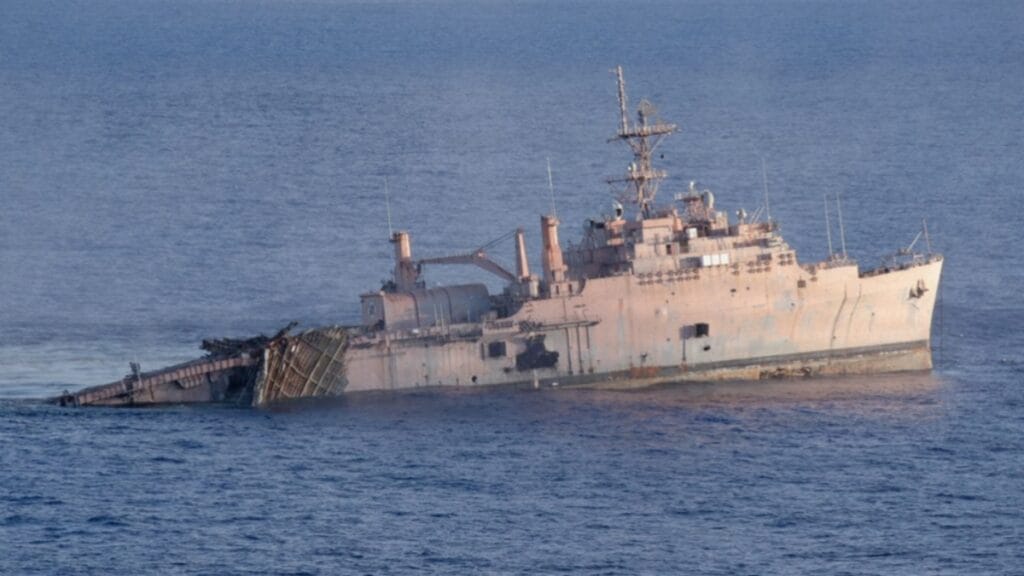
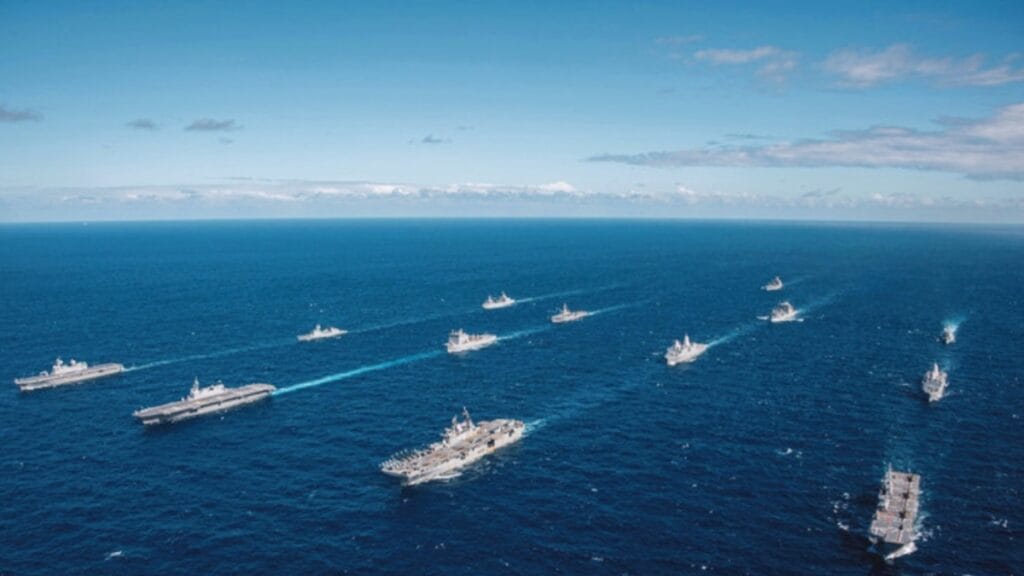
On 27 June 2026, the former USS Juneau met its ultimate fate during Exercise Valiant Shield, a biennial, multilateral field training exercise conducted by the U.S. Armed Forces and partner nations in the Western Pacific. The ship was used as a target for a live-fire sinking exercise (SINKEX) more than 200 nautical miles off the coast of Guam, in the Mariana Islands Range Complex.
The sinking exercise brought together air, surface, and subsurface assets in coordinated strikes against the decommissioned vessel. A Japan Maritime Self-Defense Force (JMSDF) submarine fired a torpedo that struck the former amphibious transport dock, sending it to the ocean floor. This was part of the broader Valiant Shield 2026 exercise, which also included units from Australia, Canada, and New Zealand.
Before the exercise, the target vessel underwent extensive environmental preparation, including the complete removal of hazardous materials such as PCBs, petroleum residues, and other pollutants. The selected site was carefully surveyed to ensure the safety of marine life, vessels, and personnel.
Rear Admiral Eric Anduze, commander of Carrier Strike Group 5 and Task Force 70, commented on the exercise: “This SINKEX provided an outstanding opportunity for our joint team to integrate capabilities across domains, honing the lethal precision and coordination essential for high-end maritime operations in the Pacific theater.”
The sinking of the USS Juneau in 2026 represented the final chapter in a remarkable service history. From its commissioning during the height of the Cold War to its participation in major conflicts and humanitarian missions, and finally its use as a training target, the ship served the United States in multiple capacities over nearly six decades.
The USS Juneau (LPD-10) served the United States Navy for nearly forty years, from 1969 to 2008. During its long career, the ship participated in some of the most significant military operations of the late 20th century, including the Vietnam War, Operation Desert Storm, and numerous multinational exercises. The ship also demonstrated its value in humanitarian missions, providing relief in Bangladesh after a cyclone, supporting operations in Somalia, and standing ready to assist in Myanmar.
Its forward deployment to Japan in 1999 marked a significant shift in its operational focus, placing it at the forefront of American naval power in the Western Pacific. The ship’s participation in the East Timor peacekeeping mission further demonstrated its versatility and importance to international stability.
The final mission of the USS Juneau as a target vessel in 2026 contributed to training and interoperability among allied forces, ensuring that even in its last moments, the Juneau continued to serve the nation that built it. The ship’s legacy lives on in the countless sailors and Marines who served aboard her and in the operations that helped shape the modern U.S. Navy.
Frequently Asked Questions
1. When was the USS Juneau (LPD-10) commissioned? The USS Juneau was commissioned on 12 July 1969 and served for nearly four decades until its decommissioning in 2008.
2. What class of ship was the USS Juneau? The USS Juneau was an Austin-class amphibious transport dock (LPD-10). This class of ship was designed to land Marines and their equipment either by landing craft carried in the well deck or by helicopters operating from the flight deck.
3. What conflicts did the USS Juneau participate in? The Juneau participated in the Vietnam War, earning five battle stars, and supported Operation Desert Shield and Operation Desert Storm in the Persian Gulf. The ship also served in humanitarian operations in Bangladesh and Somalia.
4. What was the USS Juneau’s role in the Exxon Valdez oil spill? The Juneau was the first naval vessel on the scene of the Exxon Valdez oil spill in April 1989. It served as the command and control ship for Joint Task Force Alaska, providing berthing, communications, transportation, food, medical, and laundry services for hundreds of civilian cleanup workers.
5. Where was the USS Juneau homeported? The Juneau was homeported in San Diego, California, until 30 July 1999, when it was forward-deployed to Sasebo, Japan, as part of a “SHIP-SWAP” with USS Dubuque.
6. What was the “SHIP-SWAP” program? The “SHIP-SWAP” program was an innovative approach where two ships exchanged homeports while their crews remained in their original locations. The Juneau swapped with USS Dubuque in 1999, with the Juneau moving to Sasebo, Japan, while Dubuque returned to San Diego.
7. When was the USS Juneau decommissioned? The USS Juneau was decommissioned on 30 October 2008 after 38 years of active service. She was struck from the Naval Vessel Register on 13 November 2017.
8. What happened to the USS Juneau after decommissioning? After decommissioning, the Juneau was kept in the Naval Sea Systems Command Inactive Ships On-Site Maintenance Office at Pearl Harbor. In June 2026, during Exercise Valiant Shield, the former ship was used as a target for a live-fire sinking exercise (SINKEX) and was sunk in the Philippine Sea by a torpedo from a Japanese submarine.