For millions of people around the world, the U.S. Green Card is the ultimate dream. it offers the chance to live, work, and build a future in the United States permanently. But navigating the U.S. immigration system can often feel like trying to solve a complicated puzzle. The rules change frequently, the paperwork is extensive, and a single mistake can cause significant delays. If you are considering applying for a Green Card in 2026, it is more important than ever to have the right information.
This guide simplifies the entire process for you, breaking down the eligibility categories, the two main application routes, recent policy changes, and a step-by-step timeline of what to expect. Whether you are applying through family, employment, or the diversity lottery, understanding the nuances of the system can save you years of frustration. Let’s dive in and help you understand the path to becoming a lawful permanent resident.
U.S. Green Card Process
Understanding the Basics: What is a Green Card and Why Do You Need One?
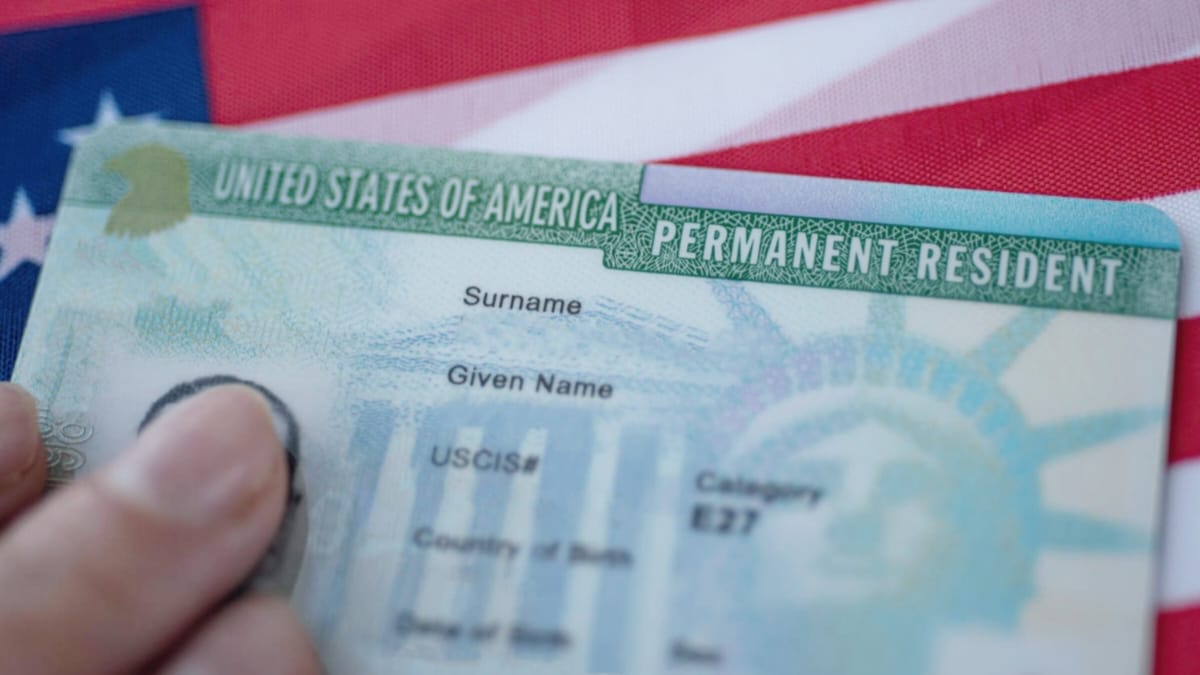
A Green Card is the common term for a Permanent Resident Card. It is the official document that proves you have been granted the right to live and work permanently in the United States. While you are not a U.S. citizen, you enjoy many of the same rights and protections. As a lawful permanent resident (LPR), you can live permanently in the U.S., work anywhere you choose, and you are protected by all U.S. laws. You also gain the ability to sponsor certain family members for their own Green Cards, creating a pathway for your loved ones to join you in America.
• Employment Freedom: You are not tied to a specific employer like some visa holders. You can work in any field, change jobs freely, or start your own business without needing additional work authorization.
• Travel Flexibility: You can travel in and out of the U.S. for extended periods, though you must be careful not to stay abroad too long—generally over one year—without a re-entry permit, as this could jeopardize your status.
• Path to Citizenship: Perhaps the most significant long-term benefit is the ability to eventually apply for U.S. citizenship through naturalization after five years as a permanent resident (or three years if married to a U.S. citizen)
• Access to Benefits: Permanent residents may qualify for certain government benefits, including in-state tuition at many universities, Social Security, and Medicare after meeting specific requirements.
• Sponsor Family Members: You can petition for your spouse and unmarried children to come to the U.S. as permanent residents as well.
However, it’s also important to remember that with this status comes responsibility. Permanent residents are required to obey all federal, state, and local laws, and they must file U.S. income tax returns on their worldwide income. Failing to maintain your status or committing certain crimes can lead to deportation. It is also crucial to carry your Green Card with you at all times as proof of your legal status.
Green Card Eligibility
Green Card Eligibility: Which Path Fits Your Situation?
You cannot simply “apply” for a Green Card; you must be eligible under one of the specific categories established by U.S. immigration law. The most common pathways include family-based, employment-based, and special categories like the Diversity Visa Lottery. Understanding which category fits your situation is the first and most critical step in your journey.
1. Green Card Through Family
This is one of the most popular routes and accounts for a significant portion of all Green Cards issued annually. If you have a close family member who is a U.S. citizen or a lawful permanent resident, they can sponsor you.
• Immediate Relatives of U.S. Citizens: This category is for spouses, unmarried children under the age of 21, and parents of U.S. citizens who are at least 21 years old. A key advantage is that there is no cap on the number of visas issued each year, which often means faster processing. There is also no waiting period for a visa to become available, making this the quickest family-based route.
• Family Preference Categories: For other relatives like unmarried children over 21, married children of any age, and siblings of U.S. citizens, or spouses and unmarried children of Green Card holders. These categories have annual numerical limits, which can lead to a waiting period that lasts several years or even decades, depending on the applicant’s home country. The visa bulletin, published monthly by the State Department, tracks these waiting periods
2. Green Card Through Employment
The U.S. seeks to attract skilled workers, researchers, and investors who can contribute to the economy. This route is for individuals with specific talents, advanced degrees, or the capital to invest in the U.S. economy. Employment-based Green Cards are divided into five preference categories.
• EB-1 (First Preference): For individuals with extraordinary ability in sciences, arts, education, business, or athletics; outstanding professors and researchers; or multinational managers and executives. This category does not require a labor certification, which significantly speeds up the process.
• EB-2 (Second Preference): For professionals with advanced degrees (master’s or higher) or individuals with exceptional ability in the arts, sciences, or business. A job offer and labor certification (PERM) are generally required, unless you qualify for a National Interest Waiver (NIW) , which allows you to self-petition if your work benefits the U.S. national interest
• EB-3 (Third Preference): For skilled workers (with at least two years of experience), professionals (with a bachelor’s degree), and other workers (for unskilled labor). This generally requires a job offer and an approved PERM labor certification, demonstrating that no qualified U.S. worker is available for the position.
• EB-4 (Fourth Preference): For special immigrants, including religious workers, certain international employees, and other specialized categories.
• EB-5 (Fifth Preference): For immigrant investors who invest a minimum of $800,000 in a qualifying commercial enterprise in a targeted employment area, or $1.05 million elsewhere, and create at least 10 full-time jobs for U.S. workers.
3. Diversity Immigrant Visa Program (Green Card Lottery)
Also known as the “Green Card Lottery,” this program provides up to 50,000 immigrant visas annually to individuals from countries with historically low rates of immigration to the U.S. Applicants must have a high school education or its equivalent, or at least two years of qualifying work experience. The application period typically opens in October each year, and selection is random. If selected, you can apply for a Green Card through consular processing.
4. Humanitarian and Other Special Categories
• Refugees and Asylees: Individuals granted refugee status or asylum in the U.S. can apply for a Green Card after one year of continuous physical presence.
• Victims of Human Trafficking (T-visa) and Crime Victims (U-visa): Those who have been victims of severe forms of trafficking or certain crimes and have helped law enforcement may be eligible for a Green Card.
• VAWA Self-Petitioners: Victims of battery or extreme cruelty by a U.S. citizen or permanent resident spouse or parent can self-petition for a Green Card without the abuser’s knowledge or consent.
• Special Immigrant Juveniles: Children who have been abused, neglected, or abandoned and are under the jurisdiction of a U.S. juvenile court may be eligible for a Green Card.
The 2026 Shift: Adjustment of Status vs. Consular Processing
Once you have an approved petition or determine you are eligible, you must decide which process to use to obtain your Green Card. The choice depends on where you are located and, in 2026, has become a critical strategic decision due to recent policy changes.
What is Adjustment of Status (AOS)?
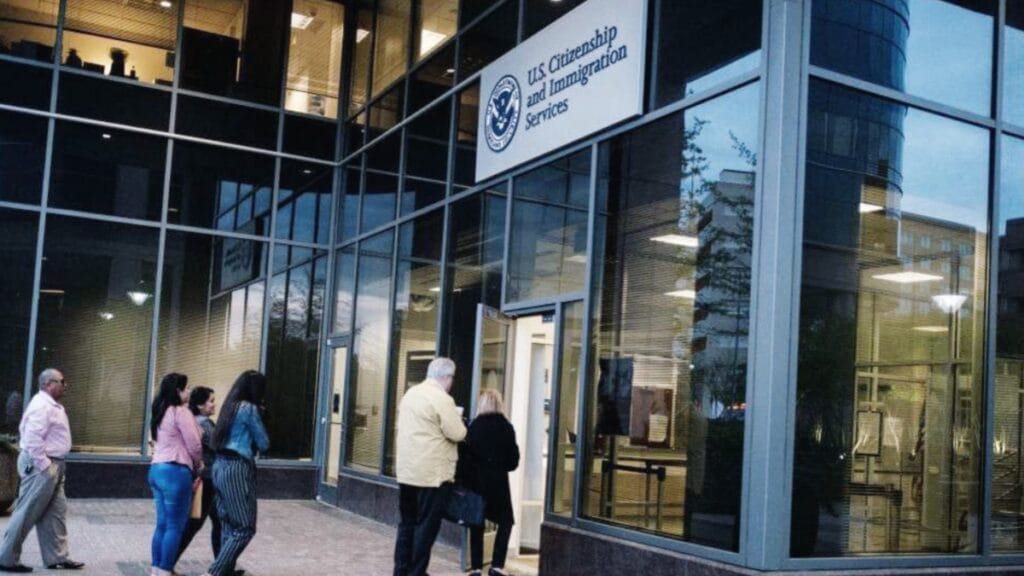
This is the process for applicants who are already physically present in the United States and entered legally. You file Form I-485 with the U.S. Citizenship and Immigration Services (USCIS), and your case is adjudicated entirely from within the country. You generally do not need to return to your home country for a visa interview, as the interview is conducted at a local USCIS field office.
Advantages of AOS:
1. You can remain in the U.S. throughout the entire process.
2. You can apply for work authorization (Form I-765) and travel permission (Form I-131) while your case is pending.
3. You avoid the risk of leaving the U.S. and potentially being denied re-entry.
2026 Update: The U.S. government issued a new policy memo on May 21, 2026, strongly indicating a preference for Consular Processing. While Adjustment of Status is still legally available, the policy instructs officers to grant it only under what it terms “extraordinary circumstances”. This does not mean AOS is impossible, but it is no longer the standard pathway it once was. For many applicants, particularly those with simple immigration histories, AOS may remain viable, but you should be prepared for heightened scrutiny and additional requests for evidence. For others with past visa overstays or unauthorized work, Consular Processing might now be considered the safer route because the policy explicitly discourages AOS in such cases.
The U.S. government issued a new
What is Consular Processing?
This is the process for applicants who are outside the United States or who choose to leave the U.S. to complete the process. You apply for an immigrant visa at a U.S. embassy or consulate in your home country. Once the visa is granted, you enter the U.S. and become a lawful permanent resident upon arrival.
Advantages of Consular Processing in 2026:
1. Under the new policy, this has become the standard pathway. It is often considered a more direct route and, depending on your home country, can be faster than AOS.
2. The Department of State has streamlined many consular processing procedures, making the online submission of documents through the National Visa Center (NVC) more efficient.
3. For many applicants, especially those with straightforward cases, consular processing is now the recommended path by immigration attorneys.
Crucial Consideration: For some, leaving the U.S. to go through Consular Processing is not an option. For example, individuals who have lived in the U.S. without lawful status for more than 180 days could trigger a three- or ten-year ban on re-entry by leaving. For these applicants, AOS may be the only viable choice, despite the new policy. It is essential to consult with an immigration attorney before making this decision.
Which Option is Faster and Safer in 2026?
• Speed:Consular processing is generally considered faster and is now the government’s preferred method. However, the timeline is highly dependent on the volume of applicants at the specific embassy in your home country. Some embassies process cases in a matter of months, while others have backlogs of over a year.
• Safety: Adjustment of status (AOS) is considered safer for those already in the U.S. with a clean record because you don’t have to risk leaving and being denied re-entry. However, “safety” is now relative. Given the 2026 policy shift, AOS is being granted more sparingly. An applicant with prior status violations might find consular processing is the safer bet for an approval, provided they are eligible to leave and re-enter. Ultimately, the decision should be made on a case-by-case basis with professional legal guidance.
Green Card Costs and Fees in 2026: What You Need to Budget For
Applying for a Green Card is not cheap. The fees can add up quickly, especially if you are filing for multiple family members. It is important to budget carefully and understand all the costs involved so there are no surprises along the way.
Breakdown of Typical Fees: • Form I-130 (Petition for Alien Relative): Approximately $535 for online filing or $535 for paper filing. This is the fee for a U.S. citizen or permanent resident to sponsor a family member.
• Form I-140 (Immigrant Petition for Alien Worker): Approximately $700, plus an additional $300 for the Asylum Program Fee if filing from within the U.S.
• Form I-485 (Application to Register Permanent Residence or Adjust Status): Approximately $1,225 for applicants under 79 years of age (includes the $750 filing fee and $85 biometrics fee).
• Form DS-260 (Immigrant Visa Application): Approximately $325 per applicant for consular processing.
• Form I-765 (Application for Employment Authorization): Approximately $410 for those applying separately from the I-485. When filed concurrently with the I-485, the fee is usually waived.
• Form I-131 (Application for Travel Document): Approximately $575, though this fee is often waived when filed with the I-485.
• Medical Examination: This is a required step. The cost can range from $200 to $500 depending on the doctor and location. You must use a USCIS-approved civil surgeon.
• Immigration Medical Exam and Vaccination: Many doctors charge additional fees for required vaccinations. Plan to budget at least $300 to $600 for this entire step.
• Attorney Fees: While not mandatory, hiring an immigration attorney is highly recommended for complex cases. Attorney fees can range from $3,000 to $10,000 or more, depending on the complexity and location.
• Final Green Card Production Fee: Some applicants will be required to pay a separate fee of $220 for the production of the physical Green Card after approval.
Total Estimated Cost: For a single applicant, the total cost can range from $2,000 to $5,000 without attorney fees, and $5,000 to $15,000 with legal representation. For a family of four, these costs can easily double. It is also worth noting that fees are subject to change, so always check the USCIS website for the most up-to-date fee schedule before submitting your application.
$5,000 to $15,000
Common Mistakes to Avoid When Applying for a Green Card
The Green Card application process is long, complex, and unforgiving of errors. Even a small mistake can lead to delays, requests for additional evidence, or outright denial. Here are some of the most common mistakes applicants make and how to avoid them.
1. Filing the Wrong Form or Incorrect Fee
USCIS is strict about form versions and fee payments. If you file an outdated form or submit the wrong fee amount, your application will be rejected and returned to you. This can waste weeks or even months of valuable time. Always download the latest forms directly from the USCIS website and double-check the current fee schedule.
2. Missing Deadlines or Expiration Dates
Failing to respond to a Request for Evidence (RFE) within the specified time frame (usually 30 to 90 days) can result in your application being automatically denied. Additionally, if you receive a conditional Green Card (valid for two years), you must file Form I-751 to remove the conditions within the 90-day window before the card expires. Missing this window can put your permanent resident status at risk.
3. Providing Inconsistent Information
USCIS cross-references all your past applications, visa applications, and entry records. If the information on your current application (such as dates of employment, addresses, or travel history) contradicts what you previously submitted, it will raise red flags. This can lead to accusations of fraud or misrepresentation, which are grounds for denial and even deportation. Be meticulous and consistent in all your answers.
4. Failing to Disclose Past Immigration Violations
Many applicants make the mistake of trying to hide past visa overstays, unauthorized work, or criminal records. This is a serious error. USCIS will almost certainly discover these issues during the background check. It is always better to disclose everything upfront and, if possible, provide a detailed explanation. In some cases, certain violations may be forgiven, but hiding them is never forgiven.
5. Not Submitting Sufficient Evidence for Marriage-Based Cases
For marriage-based Green Card applications, you need to prove that your marriage is “bona fide” (genuine and not entered into for immigration purposes). USCIS looks for evidence of a shared life. Failure to provide sufficient evidence, such as joint bank accounts, lease agreements, photographs, affidavits from friends, and insurance policies, can lead to a denial. Be comprehensive and provide as much documentation as possible.
6. Traveling Without Advance Parole
If you are in the process of Adjustment of Status and you leave the U.S. without obtaining Advance Parole (Form I-131), your application will be considered abandoned. You will be denied re-entry and will have to start the entire process over from outside the U.S. Always wait for approval of your Advance Parole document before traveling.
The Step-by-Step Green Card Application Process
While the exact process depends on your situation and whether you are using AOS or Consular Processing, the general journey follows a similar pattern. Understanding each stage can help reduce anxiety and keep you on track.
Step 1: Determine Your Eligibility and File the Immigrant Petition. Before you can apply for a Green Card, someone (usually a family member or employer) must file a petition on your behalf. For family-based cases, this is Form I-130. For employment-based cases, it is Form I-140. For some special categories like the Diversity Visa Lottery or VAWA, you can self-petition. Wait for the petition to be approved or for a visa number to become available (as shown in the monthly Visa Bulletin) before proceeding.
Step 2: Submit Your Application.
• For AOS: File Form I-485 (Application to Register Permanent Residence or Adjust Status). You can often file this together with the I-130 or I-140 in a process called “concurrent filing” , which can save time. You may also apply for work authorization (Form I-765) and travel permission (Form I-131) at the same time. Be sure to include all required supporting documents, such as birth certificates, marriage certificates, passports, and financial documents.
• For Consular Processing: Once the petition is approved and a visa number is available, the National Visa Center (NVC) will contact you to complete the online application (Form DS-260) and submit all required civil and supporting documents. You will also need to complete the medical examination and pay the visa fees.
Step 3: Biometrics Appointment.
After filing, USCIS or the NVC will schedule you for a biometrics appointment to collect your fingerprints, photograph, and signature. This is used to conduct a background and security check through the FBI. Failure to attend this appointment will result in your application being denied.
Step 4: Attend the Interview.
Most applicants will be required to attend an in-person interview at a USCIS field office (for AOS) or a U.S. embassy/consulate (for consular processing). For marriage-based applications, the interview will focus heavily on the bona fides of your relationship. Be prepared to answer questions about your spouse’s daily habits, your living situation, and your future plans. For employment-based cases, the interview may focus on your job duties and qualifications.
Step 5: Receive a Decision.
USCIS will send you a written notice. If approved, you will first receive an approval notice and then your Permanent Resident Card (Green Card) in the mail. If you have been married to a U.S. citizen for less than two years at the time of approval, you will receive a conditional Green Card, which is valid for two years. You must remember to file Form I-751 to remove the conditions 90 days before it expires to maintain your status. If your application is denied, you will receive a notice explaining the reasons and informing you of your appeal options.
Conditional vs. Permanent Green Card: What’s the Difference?
Understanding the difference between a conditional and a permanent Green Card is essential, especially for those applying through marriage or investment.
Conditional Green Card (CR-1):
Issued to individuals who have been married to a U.S. citizen or permanent resident for less than two years at the time of approval.
Valid for only two years.
1. You must file Form I-751 (Petition to Remove Conditions on Residence) within the 90-day window before the card expires.
2. If you fail to file, your permanent resident status will automatically terminate, and you could face deportation.
3. The I-751 process requires you to provide extensive evidence that your marriage remains genuine and was not entered into for immigration purposes. You may also be required to attend another interview.
Permanent Green Card (IR-1):
1. Issued to individuals who have been married to a U.S. citizen for two or more years at the time of approval.
2. Valid for ten years.
3. You do not need to remove any conditions. The card is valid for a decade, and you can renew it like any other permanent resident.
4. After five years (or three years if married to a U.S. citizen), you can apply for U.S. citizenship.
For EB-5 immigrant investors, a conditional Green Card is also issued for two years, and the conditions must be removed by proving that the investment was sustained and the required jobs were created.
Travel Rules, Renewals
Travel Rules, Renewals, and Maintaining Your Status
Once you have your Green Card, your responsibilities are not over. You must actively maintain your status to avoid losing it.
Traveling Outside the U.S.:
• As a permanent resident, you can travel abroad, but you should not stay outside the U.S. for more than one year without a re-entry permit.
• If you plan to be abroad for more than a year, you must apply for a re-entry permit (Form I-131) before you leave. This allows you to re-enter the U.S. without losing your status.
• Frequent or extended travel may lead to questions at the border about whether you have “abandoned” your U.S. residence. It is important to maintain ties to the U.S., such as a home, job, bank accounts, and family.
Renewing Your Green Card:
• Permanent Green Cards are valid for 10 years. You must file Form I-90 to renew your card within six months of its expiration.
• Conditional Green Cards are valid for 2 years. You must file Form I-751 to remove the conditions within the 90-day window before expiration.
• Failing to renew on time can make it difficult to prove your status, which can affect employment, travel, and access to benefits
When Can You Apply for U.S. Citizenship?
• Most permanent residents can apply for naturalization after five years of continuous residence in the U.S.
• If you are married to a U.S. citizen and have been living in the U.S. for three years as a permanent resident, you may apply after three years.
• You must also meet other requirements, such as being physically present in the U.S. for at least half of that time and demonstrating good moral character.
Securing a U.S. Green Card in 2026 requires careful planning, a clear understanding of the current legal landscape, and attention to detail. Whether you choose Adjustment of Status or Consular Processing, staying informed about the most recent policy changes, such as the May 2026 memo shifting preference toward consular processing, is crucial. The most important takeaway is that there is no longer a “one-size-fits-all” approach. The best path for you depends on your specific immigration history, your location, and your personal circumstances. The process can be long, expensive, and emotionally taxing, but the reward, a life of opportunity and stability in the United States, is immeasurable.
Remember, the U.S. immigration system is designed to be navigable, but it is not designed to be easy. Small errors can have significant consequences. That is why it is highly recommended to consult with an experienced immigration attorney who can guide you through the process, help you avoid common pitfalls, and ensure that your application is as strong as possible. With the right preparation, patience, and professional guidance, your dream of becoming a lawful permanent resident of the United States is entirely achievable. Start your journey today by identifying your eligibility, gathering your documents, and taking that first step toward a new future in America.