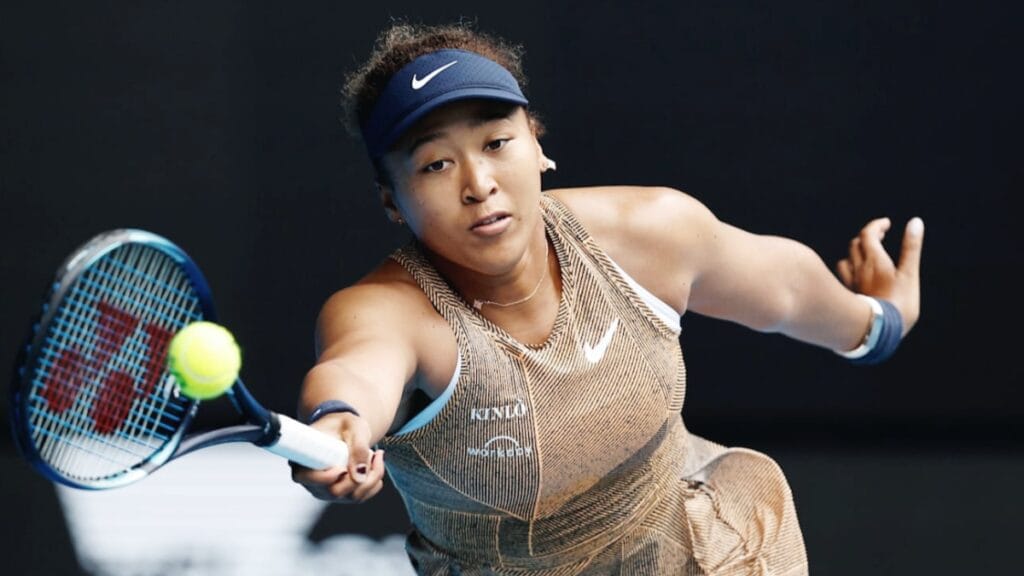
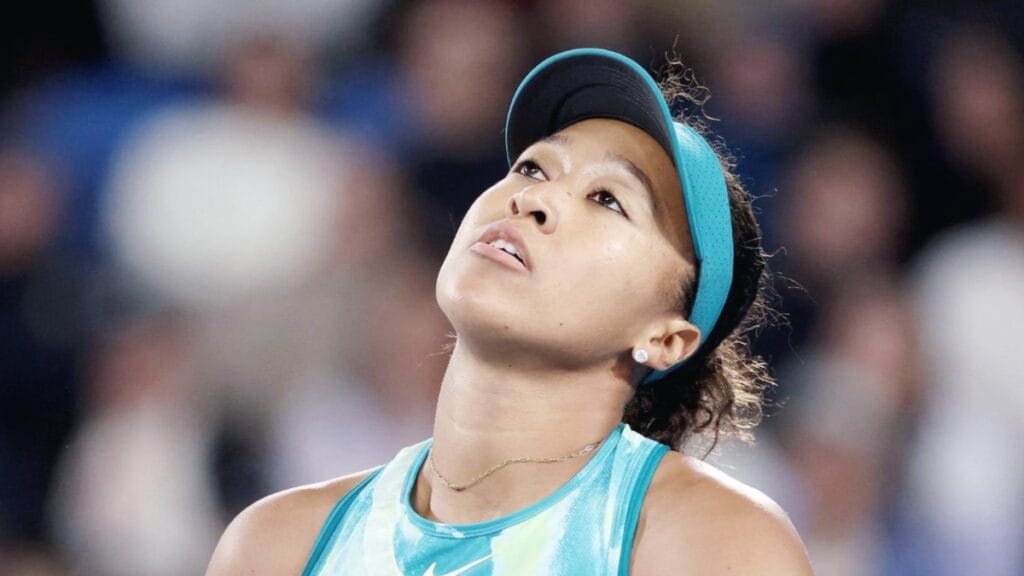
Naomi Osaka is far more than just a tennis player. She is a cultural phenomenon, a voice for the voiceless, and a symbol of resilience in the modern sporting world. Her journey from a shy young girl hitting balls on public courts to becoming a four-time Grand Slam champion and a global advocate for mental health is one of the most compelling stories in sports history. This article dives deep into the life, career, and enduring legacy of Naomi Osaka, exploring how she has redefined what it means to be a champion both on and off the court.
Naomi Osaka was born
The Early Years: A Foundation of Diversity and Determination
Naomi Osaka was born on October 16, 1997, in Chūō-ku, Osaka, Japan, to a Japanese mother, Tamaki, and a Haitian father, Leonard François. Her multicultural heritage would later become a defining aspect of her identity and global appeal. When Naomi was just three years old, her family made the pivotal decision to move to the United States, settling in Elmont, New York, on Long Island. This move was driven by her father’s vision for his daughters’ future. Leonard, who had been inspired by watching the Williams sisters’ rise to fame, decided to coach Naomi and her older sister, Mari, himself, despite having no formal tennis background. He studied the game voraciously, purchasing instructional videos and books, and dedicated himself to molding his daughters into champions.
The family later relocated to Florida, where the warm climate allowed for year-round practice. Naomi’s early training was intense but also filled with the love and support of her family. She developed a powerful baseline game, characterized by a fearsome serve and groundstrokes that could overpower any opponent. However, her early personality was notably shy and introverted. She often struggled with the spotlight, preferring to let her racket do the talking. This contrast between her ferocious playing style and her gentle, reserved nature would become a recurring theme throughout her career. By the age of 14, Naomi was already making waves in junior tournaments, and in 2012, she turned professional, officially embarking on a journey that would eventually change the landscape of women’s tennis forever.
Naomi Osaka’s rise
The Meteoric Rise: Breakthrough and Grand Slam Dominance
Naomi Osaka’s rise to the pinnacle of tennis was not gradual; it was explosive. For several years, she toiled on the lower tiers of the circuit, showing flashes of brilliance but lacking the consistency needed to break through. All of that changed in 2018. The year began with a bang when she won her first career title at the Indian Wells Open, a prestigious tournament often referred to as the “fifth Grand Slam.” En route to the final, she defeated a staggering three former World No. 1 players: Maria Sharapova, Karolína Plíšková, and Simona Halep. This victory announced to the world that a new force had arrived.
However, it was the 2018 US Open that truly cemented her place in history. In a final that will be remembered for generations, Osaka faced her childhood idol, Serena Williams. The match was filled with drama, controversy, and incredible shot-making. Osaka played with a composure that belied her age, defeating Williams in straight sets to become the first Japanese player to win a Grand Slam singles title. The victory was bittersweet, as the final was marred by Williams’s heated argument with the umpire, which overshadowed Osaka’s triumph. Instead of celebrating, the young champion found herself apologizing to the crowd during the trophy ceremony, a moment that highlighted her immense humility but also the immense pressure she would come to face.
Osaka proved that her US Open victory was no fluke by winning the 2019 Australian Open. By defeating Petra Kvitová in a thrilling three-set final, she not only secured her second major title but also ascended to the World No. 1 ranking for the first time in her career. This achievement made her the first Asian player to hold the top spot in singles. She continued her dominance in 2020, winning her third Grand Slam at the US Open, coming from a set down to defeat Victoria Azarenka. She followed this up with her fourth major title at the 2021 Australian Open, defeating Jennifer Brady in the final. By winning her first four Grand Slam finals, she joined an elite group that included Monica Seles and Roger Federer, showcasing an unparalleled ability to rise to the occasion on the biggest stages.
The Courage to Speak: A Pioneer for Mental Health in Sports
Despite her staggering success on the court, the immense pressure and scrutiny began to take a toll on Naomi Osaka’s mental health. In 2021, she made the brave and shocking decision to withdraw from the French Open, citing her long-standing struggles with depression and anxiety. She revealed that she had experienced “long bouts of depression” since her first Grand Slam win at the 2018 US Open. This revelation sent shockwaves through the sports world, sparking a global conversation about the mental well-being of athletes.
Osaka’s decision to step back was met with both support and criticism. Some viewed her as a hero for prioritizing her mental health, while others criticized her for not fulfilling her media obligations. Regardless of the mixed reactions, her stance was a watershed moment. She became an unlikely but incredibly effective activist, challenging the traditional expectations placed on athletes. Her honesty broke a long-standing taboo in professional sports, where showing vulnerability was often perceived as a sign of weakness. In an interview with ELLE Canada, she poignantly stated, “I grew up in a generation where if you showed your emotions, you were showing weakness.” She expressed a deep desire to help younger athletes understand that it is okay to talk about their feelings and to seek help.
Her advocacy extended beyond just speaking out. By withdrawing from tournaments and taking breaks to recharge, she normalized the idea that athletes are human beings first and performers second. She showed the world that it is possible to be a fierce competitor and still prioritize one’s mental health. This courage has not only inspired countless fans but has also pressured sports organizations to re-evaluate their policies and provide better support systems for athletes. Naomi Osaka’s willingness to be vulnerable has arguably become one of the most significant parts of her legacy, proving that true strength lies in knowing when to step back and take care of oneself.
Great Comeback
Motherhood, Hiatus, and the Great Comeback
In July 2023, Naomi Osaka embarked on the most transformative journey of her life: she gave birth to her first child, a daughter named Shai. This momentous occasion marked a complete shift in her priorities and forced her to step away from the sport she loved for a 15-month hiatus. The transition to motherhood was a profound experience for Osaka, one that gave her a new perspective on life and tennis. She has spoken openly about the challenges and joys of being a new mother, describing it as a learning experience that has made her stronger and more resilient.
When Osaka announced her return to the WTA Tour in 2024, the tennis world watched with bated breath. It is notoriously difficult for athletes to return to their peak after childbirth, especially in a physically demanding sport like tennis. However, Osaka was determined to prove that her story was far from over. Her 2025 season provided a glimpse of her potential, highlighted by a stunning run to the semifinals of the US Open. This was her first Grand Slam semifinal in four years, a clear sign that she was rediscovering her rhythm and confidence.
A critical factor in her successful comeback has been her decision to bring on a new coach: the highly respected Polish mentor Tomasz Wiktorowski. Wiktorowski had previously guided Iga Swiatek to multiple Grand Slam victories, and his experience and tactical expertise were invaluable to Osaka’s resurgence. Under his guidance, she adopted a more nuanced and strategic approach to her game. Her confidence began to soar once more, and she started playing with the freedom and joy that had characterized her early career. As Osaka herself put it, she felt like a “teddy bear” because her coach had created a “safe space for me to be able to express myself and my tennis.” This evolution on the court highlights that her journey is not just about rediscovering past glory but about building a sustainable and fulfilling second act as both an athlete and a mother.
Beyond Tennis: Commercial Powerhouse and Global Icon
Naomi Osaka’s impact extends far beyond the white lines of a tennis court. Her unique heritage, combined with her charisma, social activism, and fashion-forward sense of style, has made her one of the most marketable athletes in the world. In 2020, she was named the highest-paid female athlete in history, earning over an estimated $55 million in a single year. This staggering figure was driven not by prize money but by a slew of lucrative endorsement deals with global brands like Nike, Louis Vuitton, Tag Heuer, and Workday. She has become a muse for fashion designers and a symbol of modern, multicultural identity.
Her influence is perhaps most evident in her continued commitment to social justice and mental health advocacy. She has used her platform to speak out against racial injustice, becoming a visible figure in the Black Lives Matter movement. In 2026, she partnered with the wellness brand OLLY for their “Do What Serves You” campaign, a project designed to encourage women to honor their minds and bodies. She has also served as an ambassador for Maybelline’s “Brave Together” initiative, further cementing her role as a leader in destigmatizing mental health issues. These partnerships show that for Osaka, activism and business are deeply intertwined with her personal values. She is not just a spokesperson; she is a genuine advocate who uses her commercial power to amplify causes she believes in.
Her ability to transcend the sport has made her a symbol of diversity and a fashion icon. She is frequently featured on magazine covers and attends major fashion events, where her bold and unique style is celebrated. Whether she is wearing a custom-designed tennis dress or walking the red carpet, Osaka carries herself with a quiet confidence that is both inspiring and relatable. She represents a new generation of athletes who understand that their influence can be used to effect real change in the world. Naomi Osaka is not just building a legacy in tennis; she is building a legacy as a global citizen who is not afraid to use her voice for good.
The Future: A Balanced and Joyful Second Act
The Future: A Balanced and Joyful Second Act
As Naomi Osaka continues to navigate her career, motherhood, and personal growth, the future looks brighter than ever. She has found a new sense of purpose and balance, learning to separate her self-worth from her performance on the court. She has openly admitted that she no longer wants to be the best tennis player in the world at the expense of her happiness. Instead, she aims to find joy in the game and to be a positive role model for her daughter. This shift in perspective is a powerful testament to her personal growth and resilience.
Her comeback in 2024 and the subsequent success in 2025 have proven that she still has the talent and drive to compete with the best. With a renewed focus on her physical and mental well-being, and with the unwavering support of her team and family, she is poised to add more chapters to her already incredible story. Whether she wins another Grand Slam or not, her legacy is already secure. She has shown the world that a champion can be vulnerable, that a mother can be a fierce competitor, and that an athlete can be a powerful agent for social change. Naomi Osaka’s second act is not about chasing old ghosts; it is about enjoying the journey, inspiring others, and continuing to write a narrative that is uniquely her own.
Naomi Osaka’s story is a testament to the power of authenticity. She has navigated the dizzying heights of athletic success, the debilitating lows of anxiety and depression, and the profound life change of becoming a mother, all while maintaining her integrity and voice. Her legacy is not just one of Grand Slam titles and commercial success, but one of courage, the courage to be vulnerable, to speak her truth, and to redefine success on her own terms. As she continues to find joy in her game and balance in her life, her second act promises to be just as compelling as the first. Naomi Osaka is not just a tennis player; she is a symbol of hope, resilience, an