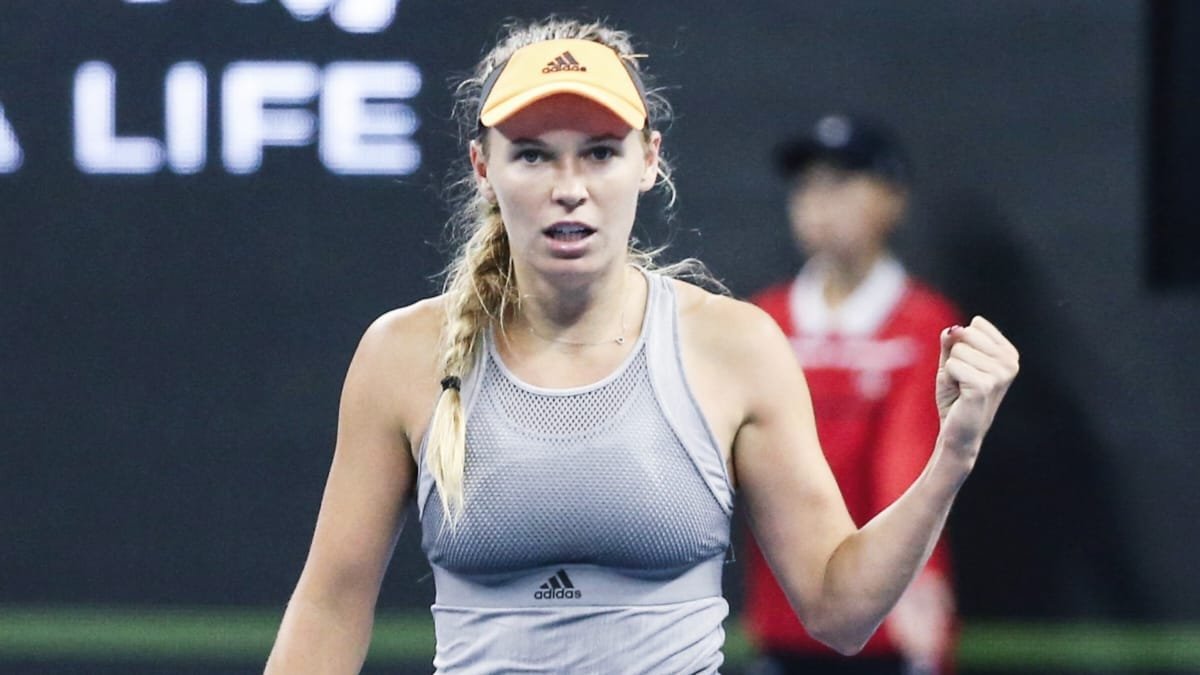
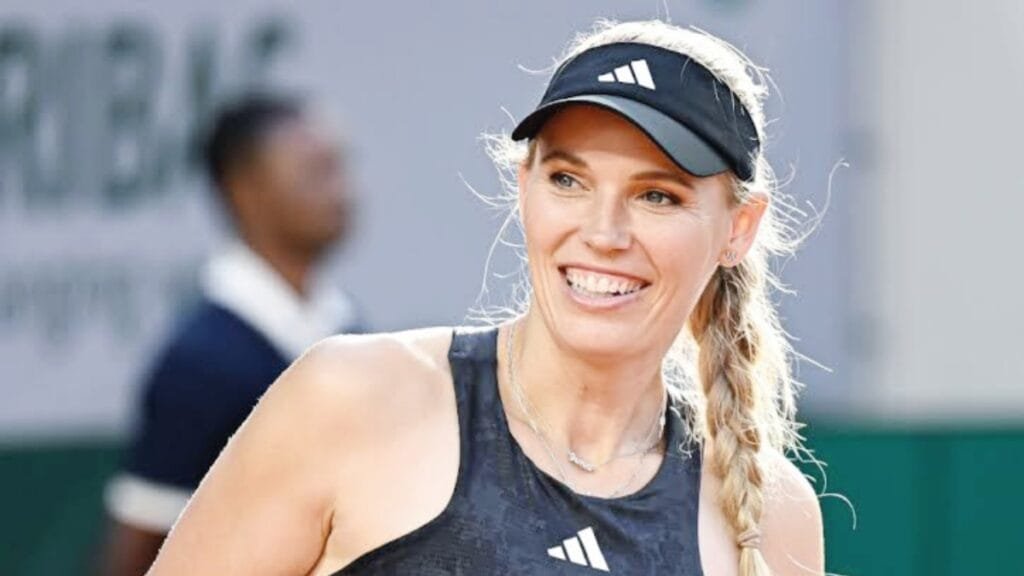
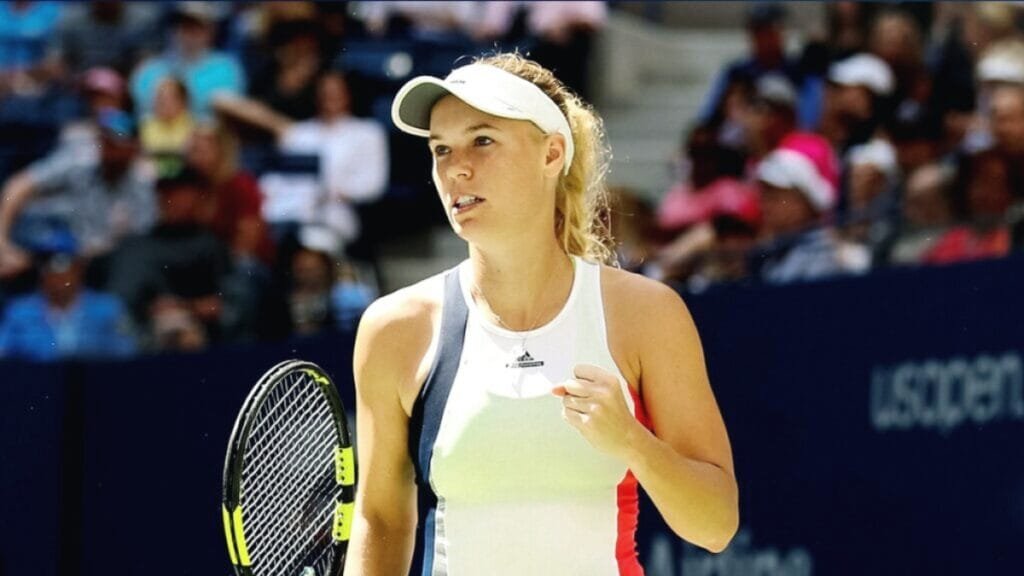
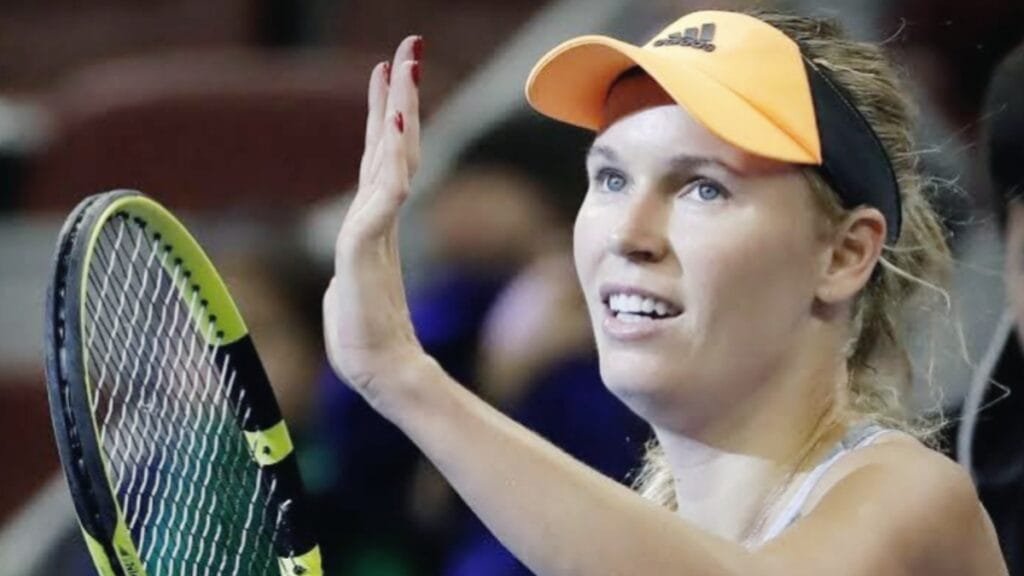
Caroline Wozniacki is a name that resonates far beyond the tennis court. For over a decade, she was a pillar of consistency and determination on the WTA Tour, known for her incredible defensive skills, unwavering fitness, and a fighting spirit that saw her overcome numerous challenges. The Danish star didn’t just play tennis; she redefined what it meant to be a top competitor in the modern era, using her athleticism and tactical intelligence to outmaneuver opponents who often possessed more raw power.
From a young prodigy to the pinnacle of the women’s game, Wozniacki’s journey is one of persistence. She first ascended to the World No. 1 ranking in 2010 and held it for a total of 71 non-consecutive weeks, cementing her place among the elite. Despite this early success, a Grand Slam title remained an elusive goal for many years. She faced intense scrutiny and criticism, often being labeled a “choker” due to her inability to win a major. However, in a storybook ending, she finally conquered the tennis world in 2018 at the Australian Open. That victory was not just a win; it was a testament to her unwavering belief in herself.
Off the court, Wozniacki has led a life as interesting as her on-court battles. From her high-profile relationship with golfer Rory McIlroy to her marriage with former NBA star David Lee, she has navigated the spotlight with grace. Her career has been marked by a blend of personal and professional resilience, including a recent comeback after starting a family and her advocacy for rheumatoid arthritis awareness.
What makes Caroline Wozniacki truly special is her ability to connect with fans. She was never the most powerful player on the court, but she was often the smartest and the fittest. Her matches were marathons of endurance, where she would run down every ball and force her opponents into making errors. This style of play earned her both admiration and criticism, but it undeniably worked. She consistently reached the later stages of tournaments, proving that consistency is a skill in itself.
The Danish superstar also faced challenges that went beyond tennis. Her diagnosis with rheumatoid arthritis could have ended her career, but she chose to fight. She managed her condition while continuing to compete at the highest level, becoming an advocate for others living with the disease. This aspect of her life adds a layer of depth to her story, showing that she is not just an athlete but a resilient human being.
This article will explore the full arc of Caroline Wozniacki’s career. We’ll delve into her early beginnings, her rise to the top of the world rankings, the emotional victory at the Australian Open, her life away from the baseline, and her enduring legacy in the sport. Whether you are a long-time fan or just discovering her story, join us as we explore the career of one of tennis’s most respected champions.
Caroline Wozniacki’s Early Life
Caroline Wozniacki’s Early Life and Rise to Prominence
Caroline Wozniacki was born on July 11, 1990, in Odense, Denmark, into a family steeped in athletic tradition. Her father, Piotr, was a professional soccer player who played for clubs in Denmark and Poland, while her mother, Anna, played volleyball for the Polish national team. This athletic lineage provided a natural environment for young Caroline to develop her skills. She first picked up a tennis racket at the age of seven, and it was clear almost immediately that she possessed a unique talent. Her father became her lifelong coach, guiding her development with a keen eye for the tactical and physical aspects of the game.
Growing up in Denmark, Wozniacki had access to excellent training facilities and coaching. Her father’s background in soccer helped him understand movement, positioning, and fitness, which he translated into her tennis training. From a young age, Caroline was taught to move efficiently on the court, to anticipate her opponent’s shots, and to never give up on a point. These fundamentals would become the cornerstone of her professional career.
The transition from promising junior to professional player was swift. Wozniacki turned professional in 2005 at just 15 years old. Her early years on the ITF Circuit were promising, and she quickly made a name for herself with her exceptional movement and court coverage. She won her first ITF title in 2005 and continued to climb the rankings. By 2006, she had broken into the WTA top 100, becoming one of the youngest players to achieve this feat.
Her first major breakthrough came in 2008 when she won her first WTA title in Stockholm, Sweden. This victory was a sign of things to come. She followed it up with three more titles that same year, establishing herself as a rising star on the tour. Her game was built on a strong baseline foundation, a powerful defensive game, and a mental fortitude that made her a nightmare opponent for anyone on the other side of the net.
By 2009, Wozniacki had reached her first Grand Slam final at the US Open. Although she lost to Kim Clijsters, the experience was invaluable. It showed her that she belonged on the biggest stage and that a major title was within her reach. She continued to improve, winning multiple titles in 2010 and eventually ascending to the World No. 1 ranking. This period established Wozniacki as a formidable presence on the tour, a player who would never give up a point and who could outlast virtually anyone in a rally.
Her rise to the very top of the game was remarkably fast. By the end of 2010, she had won six titles and finished the year as the World No. 1. She repeated this feat in 2011, winning another six titles. Her consistency was unparalleled, as she reached the semifinals or better in the majority of tournaments she entered. The media and fans began to take notice, and she became one of the most recognizable faces in women’s tennis.
However, this period also brought its share of criticism. Many pundits argued that Wozniacki’s game lacked the firepower to win a Grand Slam. They pointed to her relatively weak serve and lack of a big forehand as limitations. Despite this, she continued to win matches and tournaments, proving that her tactical intelligence and defensive skills were more than enough to compete at the highest level. She was a pioneer of a new style of play, one that prioritized consistency and athleticism over raw power.
Wozniacki’s early career was also marked by her ability to perform in high-pressure situations. She won numerous close matches, often saving match points and coming from behind to snatch victory. This mental toughness was a trait she developed from a young age, and it would serve her well throughout her career. Her father always emphasized the importance of staying calm and focused, regardless of the scoreline. This ability to remain composed under pressure became one of her defining characteristics.
First Grand Slam Title
The Path to Her First Grand Slam Title
For years, the narrative surrounding Caroline Wozniacki was defined by her inability to capture a Grand Slam title. Despite reaching the US Open final in 2009 and 2014, she fell at the final hurdle. The criticism grew louder: Could she ever win “the big one”? The label “the best player never to have won a major” was a heavy burden, but Wozniacki never let it define her. She continued to train, believing that her breakthrough would come.
The 2018 Australian Open was the tournament that changed everything. It began inauspiciously, with Wozniacki struggling to find her rhythm in the early rounds. She dropped sets and looked vulnerable. However, the tournament took a dramatic turn in the second round against Jana Fett. Wozniacki was down a set and 1-5 in the third, and Fett served for the match at 40-15. In a moment of sheer will and luck, Wozniacki saved two match points and managed to survive. She won six straight games to escape with a 3-6, 6-2, 7-5 victory. The win was a turning point; it seemed to break a mental barrier and set the stage for the tournament of her life.
From that moment on, Wozniacki played with a newfound freedom. She defeated the likes of Carla Suarez Navarro and Magda Linette to reach the quarterfinals. There, she faced the 19-year-old sensation Elise Mertens, who had been in sensational form. Wozniacki used all her experience to win in straight sets, setting up a semifinal clash with Elise Mertens. She won that match convincingly, showcasing her superior court coverage and tactical acumen.
That resilience carried her all the way to the final, where she faced World No. 1 Simona Halep in a gripping encounter. The final was played in punishing conditions, with the temperature soaring above 30°C. The match went the distance, showcasing the incredible stamina and fighting spirit of both players. Wozniacki won the first set in a tiebreak, lost the second, and then took the decisive third set 6-4. This was her moment. After 43 Grand Slam appearances, she was finally a major champion. The relief and joy on her face as she fell to the court were palpable. The victory also propelled her back to the top of the world rankings, completing a remarkable journey from 74th in the world to World No. 1 and Grand Slam winner in just over a year.
The final against Halep was a tactical masterclass. Wozniacki knew she couldn’t out-hit Halep, so she focused on moving her around the court and forcing errors. She used her slice backhand effectively to change the pace of the rallies and kept her unforced error count low. It was a textbook performance of how to beat a top player through intelligence and patience. The victory was celebrated not just in Denmark but around the tennis world, as fans and pundits alike recognized the significance of her achievement.
This victory silenced her critics once and for all. She had proven that she could win a Grand Slam, and she did it against the best player in the world. It was a moment of redemption that will be remembered for years to come. Wozniacki’s name was finally etched into the history books, and she could now retire knowing she had achieved her ultimate goal.
Key Career Statistics
Key Career Statistics and Achievements
Caroline Wozniacki’s career is defined by a collection of impressive statistics that underscore her longevity and success at the highest level. She accumulated 30 WTA singles titles, a testament to her ability to win consistently across various tournaments and surfaces. Her career win-loss record stands at a remarkable 675–296, highlighting her status as one of the most successful and consistent players of her generation. These victories are backed by career earnings of over $37 million, placing her among the highest-earning tennis players in history.
Beyond the numbers, Wozniacki’s achievements include her reign as World No. 1 for 71 weeks, a period that included two year-end No. 1 finishes. She was a dominant force on the tour, but perhaps her most significant achievement was her Grand Slam victory at the 2018 Australian Open. This win silenced her critics and fulfilled a lifelong dream.
Other notable highlights include her three Pan Pacific Open titles, a tournament where she joined legendary figures like Steffi Graf and Gabriela Sabatini with her victories. Her 30th title came at the China Open in 2018, where she was dominant and never dropped a set. Wozniacki’s ability to perform at a high level across various continents and conditions makes her one of the most decorated players in her country’s history.
Let’s take a closer look at some of her most impressive statistics:
• WTA Singles Titles: 30
• Career Win-Loss Record: 675-296
• Career Earnings: Over $37 million
• Weeks at World No. 1: 71
• Year-End No. 1: 2010, 2011
• Grand Slam Titles: 1 (2018 Australian Open)
• Grand Slam Finals: 3 (2009 US Open, 2014 US Open, 2018 Australian Open)
• Tournament Wins: 30 across different surfaces and continents.
Wozniacki was also a consistent performer at the WTA Finals, reaching the semifinals on multiple occasions. She was known for her ability to peak at the right time and perform well in the biggest tournaments. Her record against top 10 players is also impressive, showcasing her ability to beat the best in the world.
One of her most remarkable achievements was her ability to maintain a high level of play for over a decade. While many players burn out or suffer from injuries, Wozniacki remained a top contender for 15 years. Her longevity is a testament to her fitness, professionalism, and dedication to the sport.
Life After Professional Tennis
Life After Professional Tennis
Caroline Wozniacki initially retired from professional tennis after the 2020 Australian Open, citing a desire to start a family and manage her health, as she had been diagnosed with rheumatoid arthritis. She married former NBA star David Lee in June 2019, and the couple welcomed their first child, Olivia, in 2021, and their son, James, in 2022. It seemed that her tennis career was definitively over.
However, true to her spirit, Wozniacki surprised the tennis world by announcing a comeback in 2023. In a personal essay for Vogue, she detailed her journey back to the court, driven by a desire to compete again and to show her children what their mother could achieve. Her return was met with immense fanfare and support. She played at the Canadian Open and the US Open that year, reaching the fourth round.
Her comeback continued into 2024, where she played a full season, competing in tournaments like Indian Wells, the Bad Homburg Open, and the US Open, where she again reached the fourth round. Her final match to date was a fourth-round loss at the 2024 US Open to Beatriz Haddad Maia. In April 2025, she announced the birth of her third child, Max, and has remained absent from the tour since the 2024 US Open. In late 2025, she indicated that a second return to professional tennis is unlikely, citing her family commitments.
The comeback was a testament to her competitive fire. Despite being in her mid-30s and having taken a break to start a family, Wozniacki was able to compete with the best players in the world. She reached the fourth round of two Grand Slams, proving that she still had the game to compete at the highest level. Her performances inspired many other athletes, especially mothers, who often face the difficult decision of balancing career and family.
Wozniacki has also been active in other areas since her retirement. She has been involved in various charitable endeavors, including her work with the Arthritis Foundation. She has also appeared as a commentator and analyst for tennis broadcasts, where she has been praised for her insightful commentary and deep knowledge of the game.
Health and Personal Challenges
Health and Personal Challenges
Caroline Wozniacki’s career has been as much about her battles off the court as on it. A significant turning point came in 2018 when she was diagnosed with rheumatoid arthritis, an autoimmune disease that causes joint pain and swelling. The diagnosis was a blow, as it threatened her ability to continue her career at the highest level. However, Wozniacki managed her condition and continued to compete, using her platform to raise awareness for the disease.
Rheumatoid arthritis is a chronic condition that can cause fatigue, pain, and swelling in the joints. For a tennis player who relies on movement and agility, this diagnosis could have been career-ending. But Wozniacki refused to let it stop her. She worked closely with her doctors to manage her symptoms and adjusted her training and recovery routines accordingly. Her ability to win the Australian Open shortly after her diagnosis is even more remarkable given the challenges she was facing.
Her journey was also marked by an intense personal challenge in 2018 when she reported that her parents had received death threats during a match at the Miami Open. She spoke out against the security staff, claiming they were “accepting” the abuse. This incident highlighted the darker side of fan culture and the pressures athletes face beyond the physical.
She also was involved in a public spat with Danish tennis pundit Peter Bastiansen in late 2025, accusing him of bullying her for over 20 years after he criticized her decision not to announce her retirement. Wozniacki defended herself by stating she had a frozen ranking and could play tournaments without wildcards if she chose to. These episodes showcase her resilience in the face of external and internal challenges, always asserting her independence and right to make decisions for her family and health.
Wozniacki has also been open about the pressures of being a professional athlete. She has spoken about the mental toll of constantly being in the spotlight and the expectations that come with being a top player. Her ability to navigate these pressures while maintaining a positive attitude is a testament to her mental fortitude.
Caroline Wozniacki’s Enduring Legacy
Caroline Wozniacki’s Enduring Legacy
Caroline Wozniacki’s legacy in tennis is multifaceted. She is not just a former World No. 1 and Grand Slam champion; she represents a style of play that championed consistency and grit over raw power. In an era where power-hitting became the dominant force in women’s tennis, Wozniacki proved that a defense-oriented game, built on precision and movement, could still reign supreme. She was a pioneer of athleticism in the sport, setting a new standard for fitness that many players strive to match.
Her story is one of resilience. She overcame the “best player without a Grand Slam” label that haunted her career for years, ultimately achieving her dream in one of the most thrilling finals in Australian Open history. This victory, coupled with her comeback after becoming a mother, has served as an inspiration to countless athletes and fans. It demonstrated that age, injury, and even motherhood don’t have to be the end of a career.
Wozniacki’s influence extends beyond the tennis court. She has been a vocal advocate for rheumatoid arthritis awareness, helping to bring visibility to an often-misunderstood condition. She has also shown grace under pressure, navigating the intense media spotlight and personal challenges with a level head. Her career, from the early days in Odense to the top of the world, is a testament to what can be achieved through hard work, determination, and an unwavering belief in oneself. She will be remembered as one of the greats of the modern era.
Her style of play also influenced a generation of younger players. Many young athletes looked up to her and tried to emulate her defensive skills and never-say-die attitude. She proved that you don’t have to be the biggest or the strongest to succeed; you just have to be the smartest and the most determined.
Beyond tennis, Wozniacki has built a successful life for herself and her family. She and her husband, David Lee, have created a beautiful family, and she has been an active and engaged mother. Her ability to balance family life with her professional aspirations is an inspiration to many.
Caroline Wozniacki’s career is a remarkable narrative of a player who never gave up. From a young girl in Denmark with a dream to the pinnacle of women’s tennis, she captivated audiences worldwide. Her journey was a marathon, not a sprint, characterized by immense consistency, mental fortitude, and an unrelenting work ethic. She proved that success in tennis isn’t only about power; it’s about heart, intelligence, and the ability to outlast your opponents.
Her Australian Open victory in 2018 remains a high point, a moment of catharsis that celebrated her professional journey. Combined with her re-ascension to World No. 1, it is a story that will be told for years to come. Her legacy is not just in the trophies and records she set but in her resilience in the face of personal and professional challenges. She navigated injuries, a career-defining illness, and immense pressure to become one of the sport’s most respected figures.
As she steps away from professional tennis to focus on her growing family, the sport will miss her presence. Her influence on the WTA Tour will be felt for a long time, as she paved the way for a more athletic and consistent style of play. Caroline Wozniacki will be remembered as a champion who earned her place in history through sheer grit and grace.
Her story is a reminder that sports are about more than just winning and losing. They are about the human spirit, the ability to overcome adversity, and the pursuit of excellence. Caroline Wozniacki embodied all of these qualities, and her legacy will continue to inspire generations of athletes to come.
FAQs About Caroline Wozniacki
How many Grand Slams has Caroline Wozniacki won? Caroline Wozniacki has won one Grand Slam title, which was the 2018 Australian Open. She also reached the finals of the US Open in 2009 and 2014.
When did Caroline Wozniacki become World No. 1? She first became World No. 1 in 2010 and held the ranking for a total of 71 weeks.
Is Caroline Wozniacki still playing tennis? As of 2025, she has indicated that a second return to professional tennis is unlikely due to her family commitments.
What is Caroline Wozniacki known for? She is known for her incredible defensive skills, exceptional movement on the court, and her resilient fighting spirit.
What happened to Caroline Wozniacki’s engagement to Rory McIlroy? Caroline Wozniacki and golfer Rory McIlroy were engaged but called off their engagement in 2014.
How many children does Caroline Wozniacki have? She has three children: Olivia, James, and Max.